How to Appeal a Denied Health Insurance Claim in Texas
A denial isn't final. Step-by-step guide to internal appeals and independent external review for Texans, with deadlines and what to include in your letter.
A denial letter from your health insurer can feel final. It isn't. Federal law gives almost everyone with health coverage the right to challenge a denied claim, first with the insurer itself and then with an independent reviewer who has no stake in the outcome. Many patients who appeal get the decision reversed, yet most people never try.
This guide explains how the appeal process works for Texans, what deadlines apply, and how to build an appeal that is hard to ignore.
Step One: Find Out What Kind of Plan You Have
Your appeal rights depend on who regulates your plan, and that affects where you go for help at the external review stage.
State-regulated (fully insured) plans: Individual and marketplace plans, and many small-employer plans, are regulated by the Texas Department of Insurance (TDI). Your insurance card often shows "TDI" or "DOI."
Self-funded employer plans: Many large employers pay claims themselves and hire an insurance company only to administer them. These plans are governed by the federal law ERISA and overseen by the U.S. Department of Labor, not TDI.
Medicare and Medicaid: These programs have their own separate appeal systems, with different levels and deadlines.
If you aren't sure, call the member services number on your card and ask, "Is my plan fully insured or self-funded?" Your employer's HR department can also tell you.
Step Two: Understand Why You Were Denied
Read the denial letter and your Explanation of Benefits carefully. The insurer must tell you the specific reason for the denial and how to appeal. Denials usually fall into a few groups:
Administrative: Missing prior authorization, a coding error, wrong patient information, or a coordination-of-benefits question. These can often be fixed with a phone call and a corrected claim, without a formal appeal.
Medical necessity: The insurer decided the treatment wasn't needed or that a cheaper option should have been tried first.
Coverage: The insurer says the service is excluded under your plan or is experimental.
You are entitled to request, free of charge, copies of the documents, records, and clinical criteria the insurer used to make its decision. Ask for them in writing. They show you exactly what argument you need to answer.
Step Three: File an Internal Appeal
An internal appeal asks the insurer to take a full and fair second look at its decision. Under federal rules for most private plans:
Deadline to file: Generally 180 days from the date you received the denial notice. Check your letter, because some plans list the date explicitly.
Response time: Typically up to 30 days for services you haven't received yet and up to 60 days for services you already received.
Urgent cases: If waiting could seriously jeopardize your health, request an expedited appeal. These must generally be decided within 72 hours.
Submit your appeal in writing and keep copies of everything. Send it by a method you can track, or upload it through the insurer's portal and save the confirmation.
What to Include in Your Appeal Letter
A strong appeal is organized, specific, and backed by evidence:
Identifying details: Your name, member ID, claim number, date of service, and provider name.
A clear request: One sentence stating what you want, such as "I am requesting that you reverse the denial and pay this claim."
The reason you disagree: Respond directly to the insurer's stated reason for the denial.
A letter of medical necessity: Ask your doctor to explain in writing why the treatment was necessary for you, citing your history, prior treatments that failed, and relevant clinical guidelines. This is often the most persuasive piece of an appeal.
Supporting records: Relevant office notes, test results, and any plan language that supports coverage.
Keep the tone factual and calm. Reviewers respond to evidence, not frustration.
Step Four: Request an External Review
If the insurer upholds its denial, you can usually ask for an external review by an Independent Review Organization (IRO). Doctors who don't work for your insurer review the case, and if they overturn the denial, the plan must follow their decision.
State-regulated plans: TDI handles the process and assigns an IRO. Instructions and forms are included with the insurer's final denial letter.
Self-funded ERISA plans: These plans must offer an external review through the federal process or an IRO the plan contracts with. The final denial letter explains how to request it.
Deadline: Under the federal rules, you generally have four months from receiving the final internal denial to request external review.
External review is typically available for denials based on medical judgment, such as medical necessity or experimental-treatment decisions, and for rescissions of coverage. Purely contractual disputes may not qualify, so read your letter closely.
Getting Help in Texas
If you have a state-regulated plan and believe your insurer isn't following the rules, you can contact the TDI Consumer Help Line at 1-800-252-3439 or file a complaint on the TDI website. For employer plans governed by ERISA, the U.S. Department of Labor's Employee Benefits Security Administration offers free help at 1-866-444-3272. Your doctor's office billing staff can also be a valuable ally, because they handle appeals every day.
Protect Yourself While the Appeal Is Pending
Tell the provider's billing office in writing that the claim is under appeal and ask them to pause collection activity until it is resolved. Most offices will agree. Keep a log of every call, including the date, the person you spoke with, and what they said.
The Bottom Line
A denial is the start of a process, not the end of one. Identify your plan type, understand the exact reason for the denial, file a well-documented internal appeal on time, and don't hesitate to take it to external review. Persistence and paperwork win a surprising number of these fights.
Keep reading
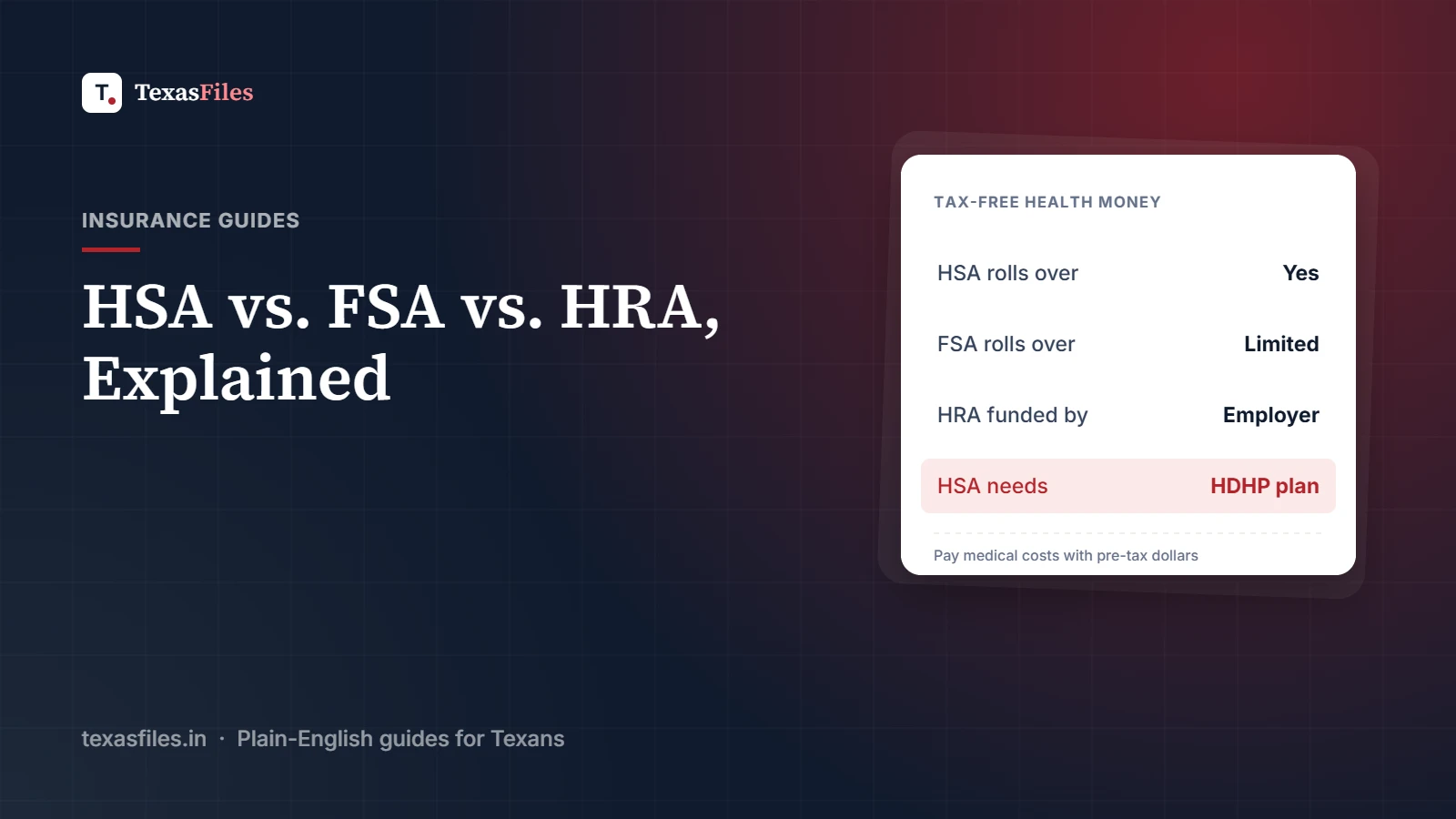
HSA vs. FSA vs. HRA: Health Accounts Explained
HSA, FSA and HRA explained: who can use each account, who contributes, rollover rules and how to pay medical bills with tax-free money.
·4 min read
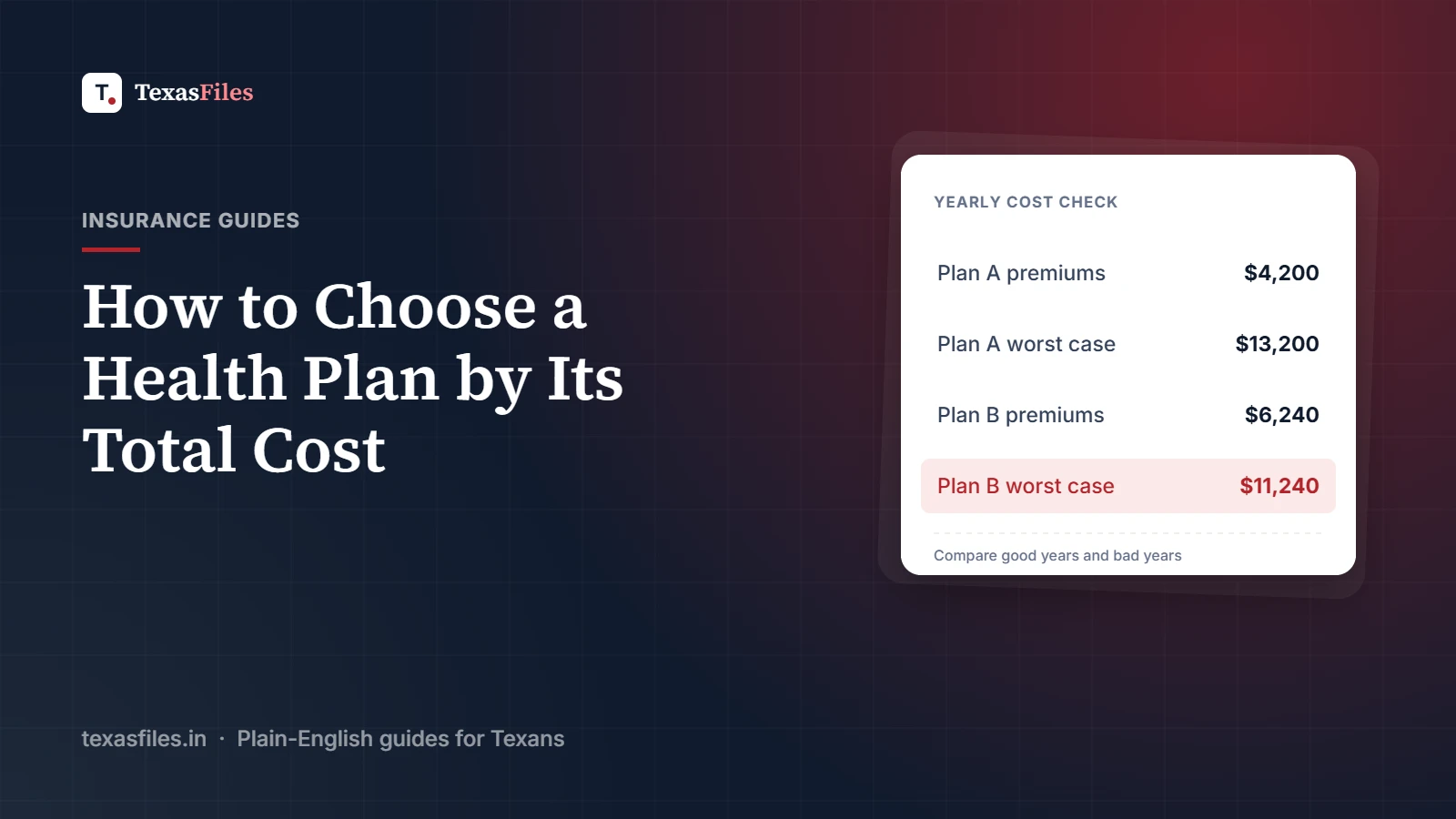
How to Choose a Health Insurance Plan: Compare the Total Cost, Not the Premium
The cheapest premium isn't always the cheapest plan. Learn how to compare health plans by total yearly cost, networks and drug coverage.
·3 min read
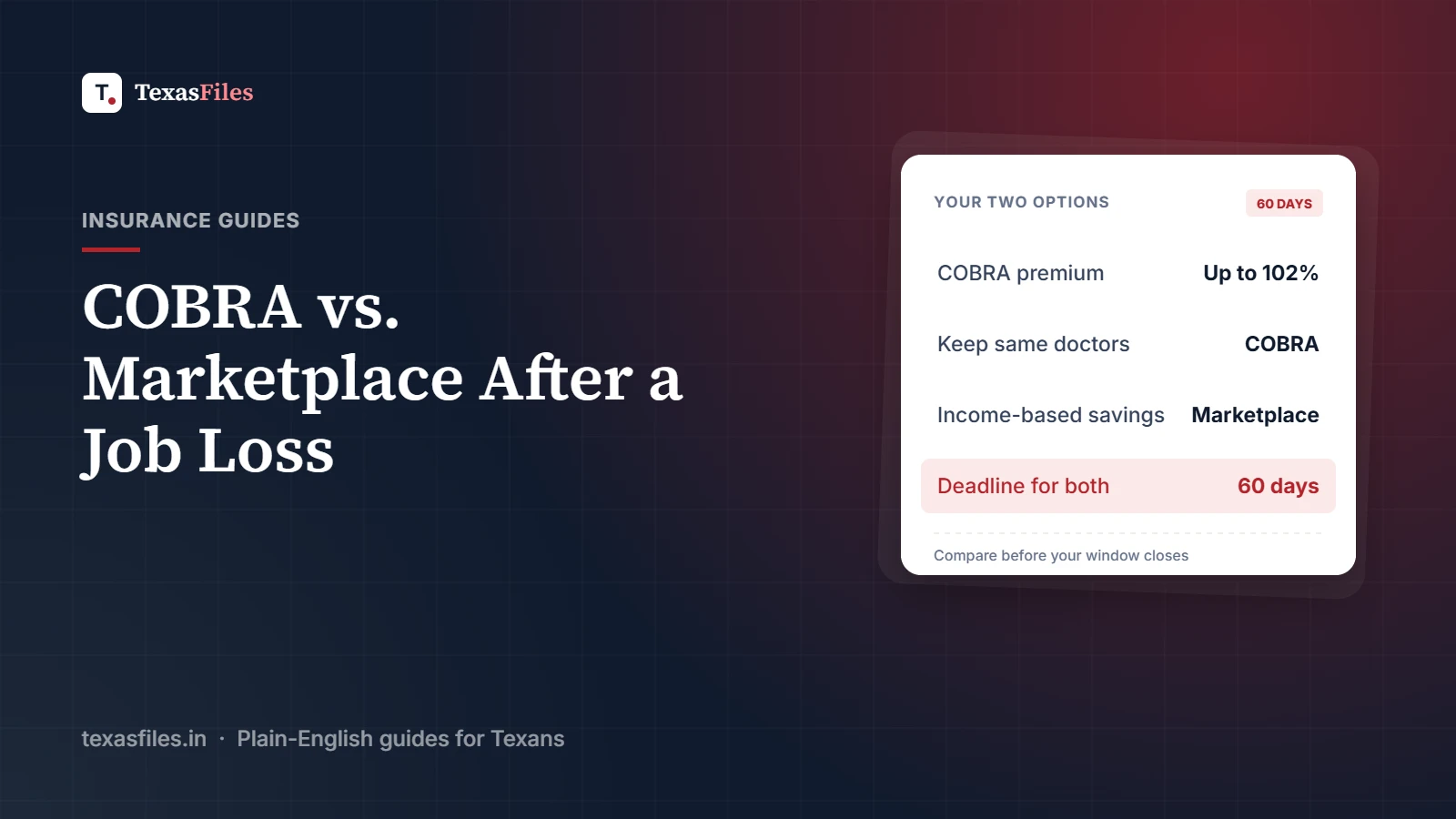
COBRA vs. Marketplace Insurance After a Job Loss in Texas
Lost your job? Compare COBRA and a HealthCare.gov Marketplace plan: costs, deadlines, networks and when each option makes sense for Texans.
·4 min read