COBRA vs. Marketplace Insurance After a Job Loss in Texas
Lost your job? Compare COBRA and a HealthCare.gov Marketplace plan: costs, deadlines, networks and when each option makes sense for Texans.
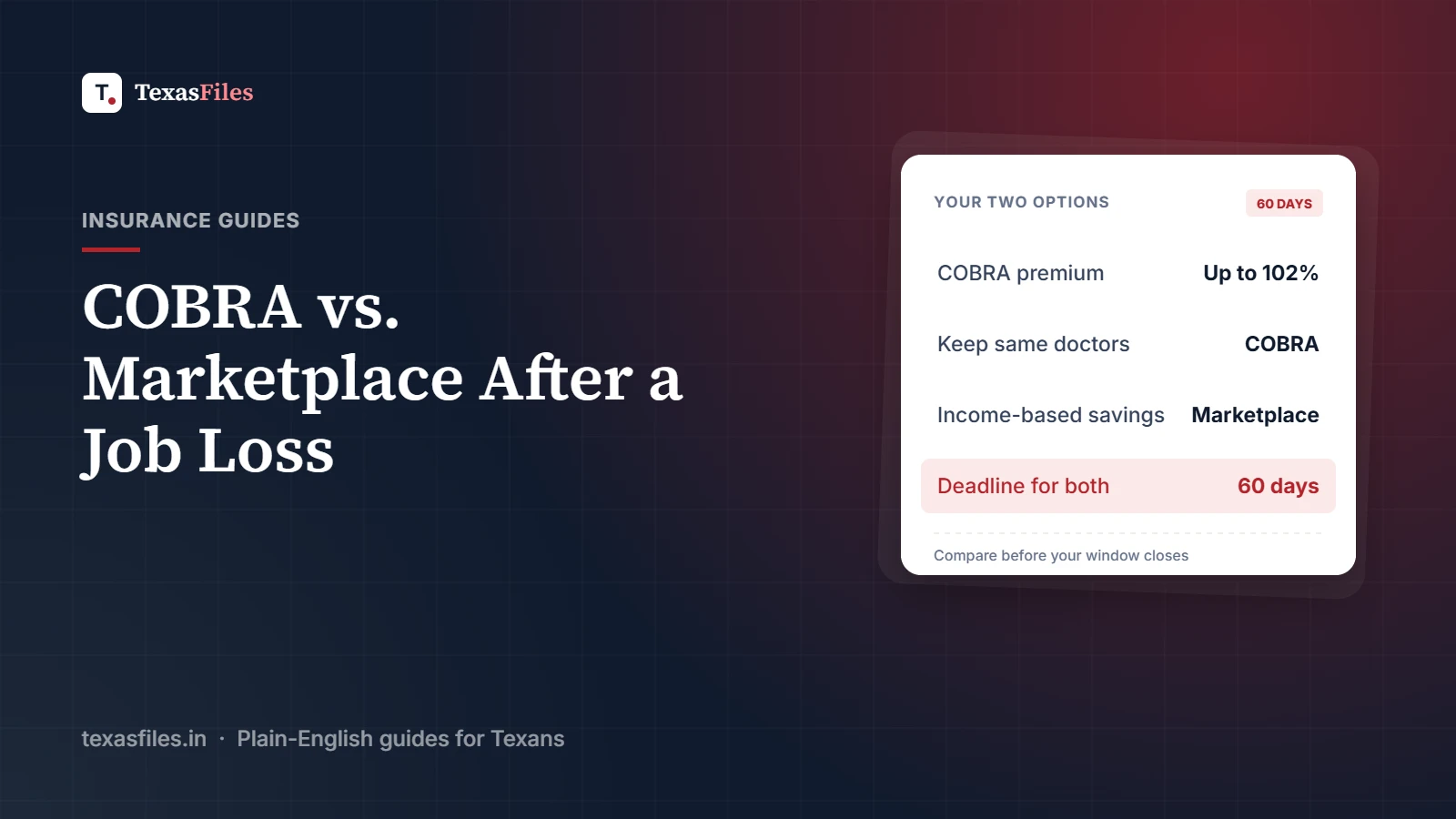
Losing a job is stressful enough without worrying about losing your health insurance. If you had coverage through your employer, you usually have two main options to stay insured: continue your employer plan through COBRA, or switch to an individual plan on the federal Marketplace at HealthCare.gov. The right choice can save you thousands of dollars.
Here's how each option works and how to decide.
What Is COBRA?
COBRA is a federal law that lets you keep your employer's group health plan after you leave your job, have your hours reduced, or experience certain other events. It generally applies to employers with 20 or more employees. Texas also has a state continuation law for some smaller employer plans that are state-regulated.
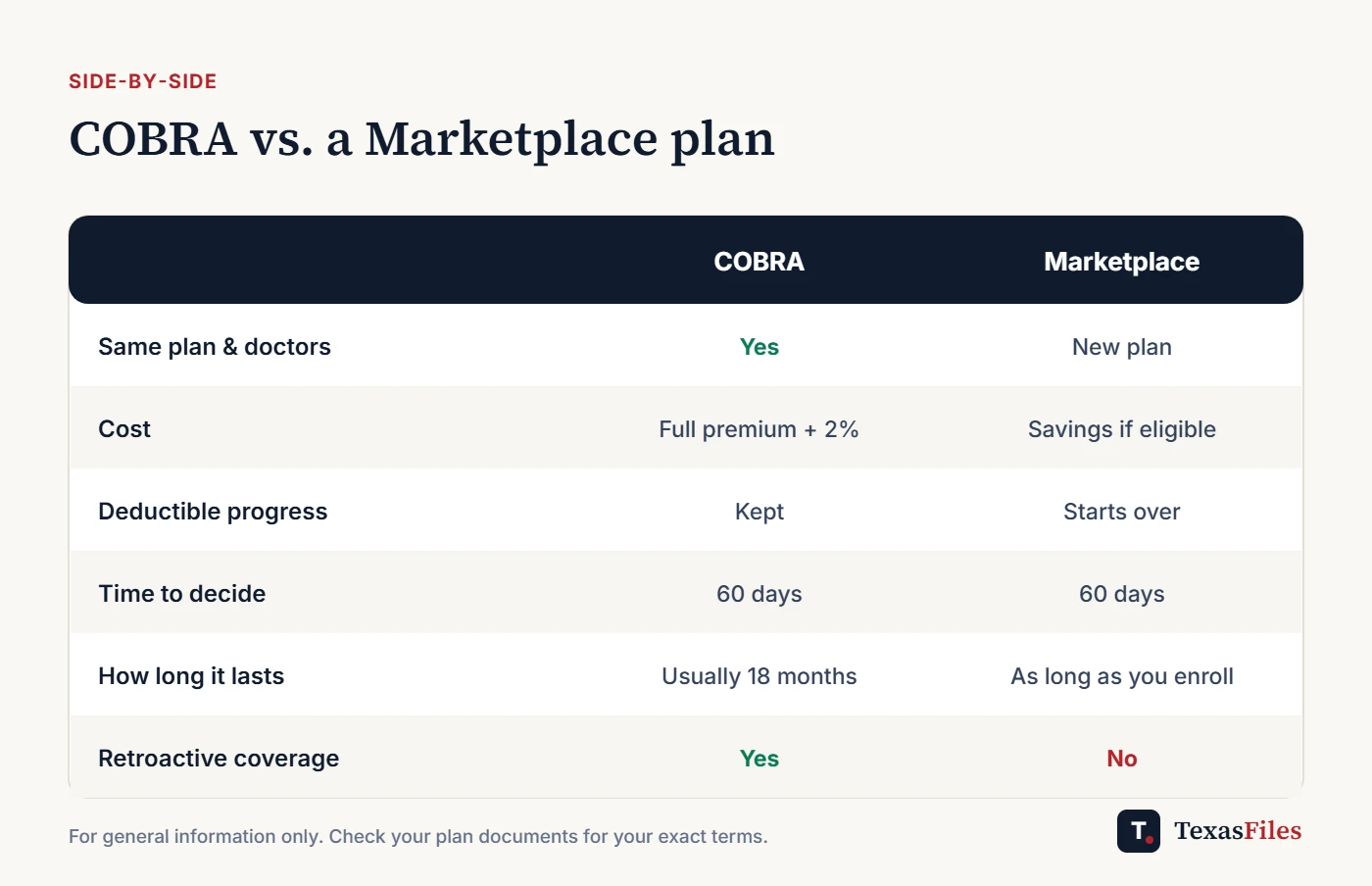
Same coverage: You keep the exact same plan, doctors, and network.
Election window: You typically have 60 days from the later of the date your coverage ends or the date you receive your COBRA notice to decide.
Retroactive coverage: If you elect within the window and pay, coverage is backdated to the day your old coverage ended, with no gap.
Duration: Usually up to 18 months, and longer in some situations, such as disability or for dependents after certain events.
Cost: You pay the full premium, including the part your employer used to pay, plus up to a 2% administrative fee.
That last point is the catch. Many people are surprised to learn their employer was paying most of their premium. COBRA premiums for family coverage can easily exceed $1,500 to $2,000 a month.
What About a Marketplace Plan?
Losing job-based coverage qualifies you for a 60-day Special Enrollment Period on HealthCare.gov. See our guide to Special Enrollment Periods for details.
Possible savings: Depending on your expected household income for the year, you may qualify for premium tax credits that lower your monthly premium, and possibly cost-sharing reductions that lower your deductible.
New plan and network: You'll be choosing a new plan, which may have a different network and drug list.
Fresh deductible: Your deductible and out-of-pocket maximum restart with the new plan.
A lower income after a job loss can make Marketplace savings significant. Enter a realistic estimate of your income for the whole year.
When COBRA May Make Sense
You've already met your deductible or are close to your out-of-pocket maximum this year. Starting over with a new plan could cost more.
You're in the middle of treatment, such as pregnancy, cancer care, or a planned surgery, and need to keep your current doctors.
Your doctors or medications aren't covered by any affordable Marketplace plan.
You expect new job coverage soon and just need a short bridge.
Your income is too high to qualify for meaningful Marketplace savings.
When a Marketplace Plan May Make Sense
You qualify for premium tax credits that make a plan much cheaper than COBRA
You haven't used much care this year
Your doctors are in network for a Marketplace plan
You need coverage for longer than COBRA provides
A Smart Timing Strategy
Because COBRA can be elected retroactively within the 60-day window, some people wait to elect it and only do so if they need care during that period. This is risky: if you miss the deadline or don't pay on time, you lose the option. And the Marketplace window is also 60 days from losing coverage, so don't let both deadlines pass. If you choose this approach, track both dates carefully.
Other Options to Consider
A spouse's employer plan: Losing your coverage typically lets you join a spouse's plan through a special enrollment, often within 30 days.
Medicaid or CHIP: If your income drops significantly, your children, and in some cases you, may qualify. You can apply any time.
Medicare: If you're 65 or older, enrolling in Medicare is often a better choice than COBRA, and delaying can lead to penalties. Read our guide on Medicare for seniors.
Frequently Asked Questions
Can I drop COBRA and switch to a Marketplace plan later?
Voluntarily dropping COBRA, or stopping payments, doesn't qualify you for a Special Enrollment Period. You'd have to wait for Open Enrollment. Running out of COBRA at the end of your 18 months does qualify.
How much does COBRA cost?
Up to 102% of the total cost of the plan. Ask your former employer's HR department or the COBRA administrator for the exact amount.
Will I have a gap in coverage?
Not if you elect COBRA within the window, since coverage is retroactive. For Marketplace plans, apply before your job coverage ends so the new plan starts the next month.
The Bottom Line
COBRA offers continuity but at full price. A Marketplace plan may be much cheaper, especially if your income has dropped. Compare both side by side, weigh how much care you've used this year, and act within 60 days.
Keep reading
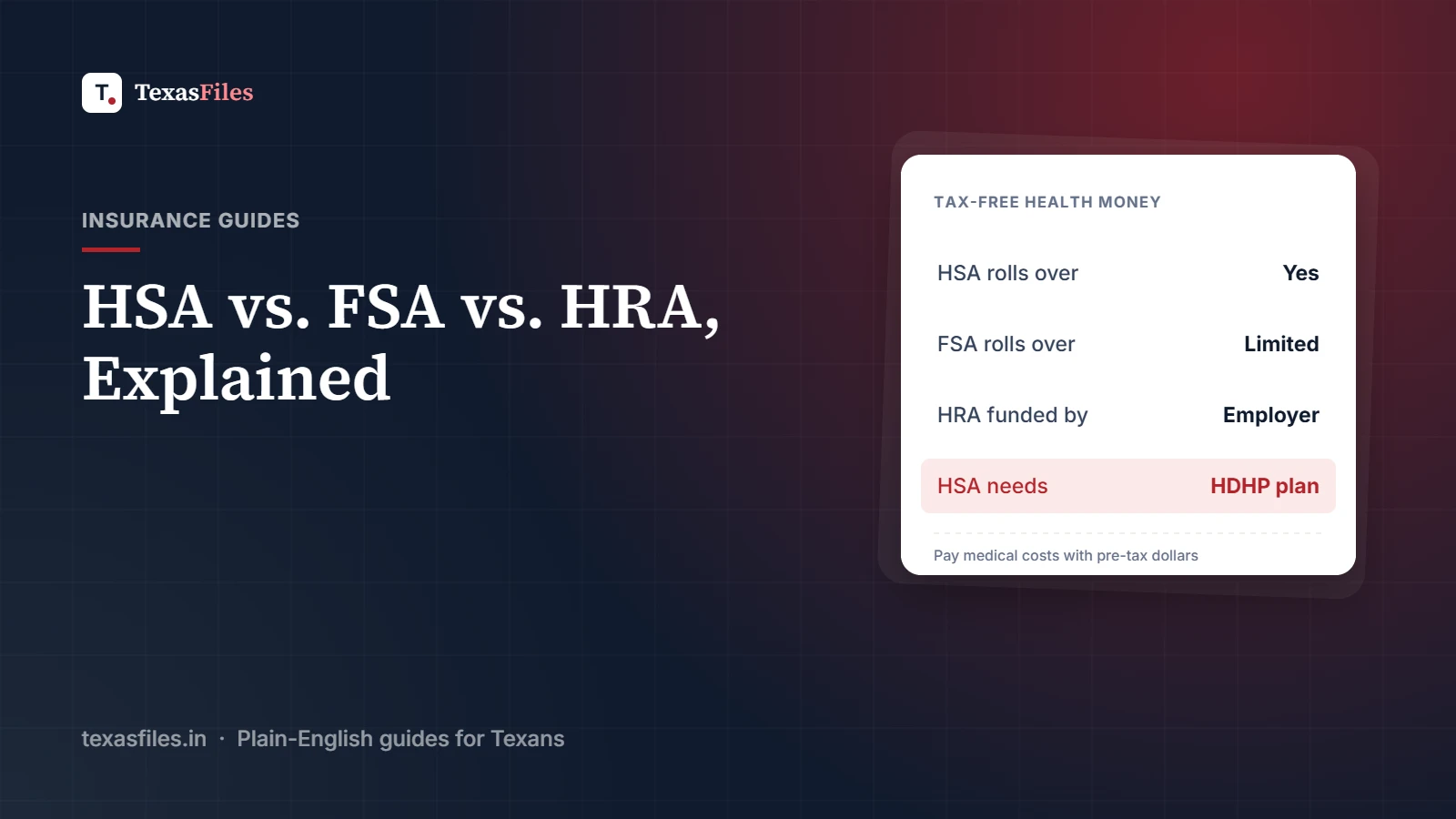
HSA vs. FSA vs. HRA: Health Accounts Explained
HSA, FSA and HRA explained: who can use each account, who contributes, rollover rules and how to pay medical bills with tax-free money.
·4 min read
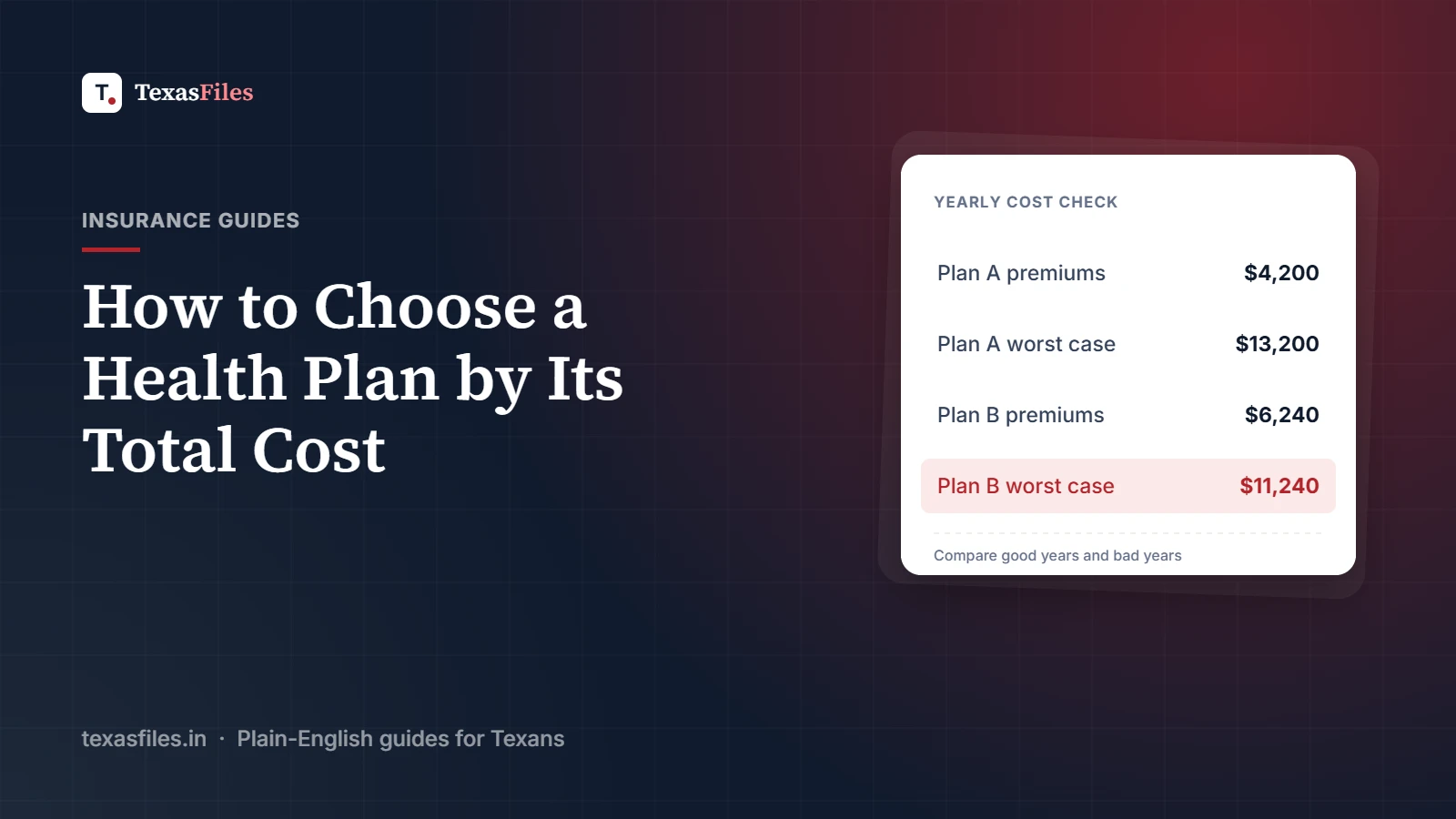
How to Choose a Health Insurance Plan: Compare the Total Cost, Not the Premium
The cheapest premium isn't always the cheapest plan. Learn how to compare health plans by total yearly cost, networks and drug coverage.
·3 min read
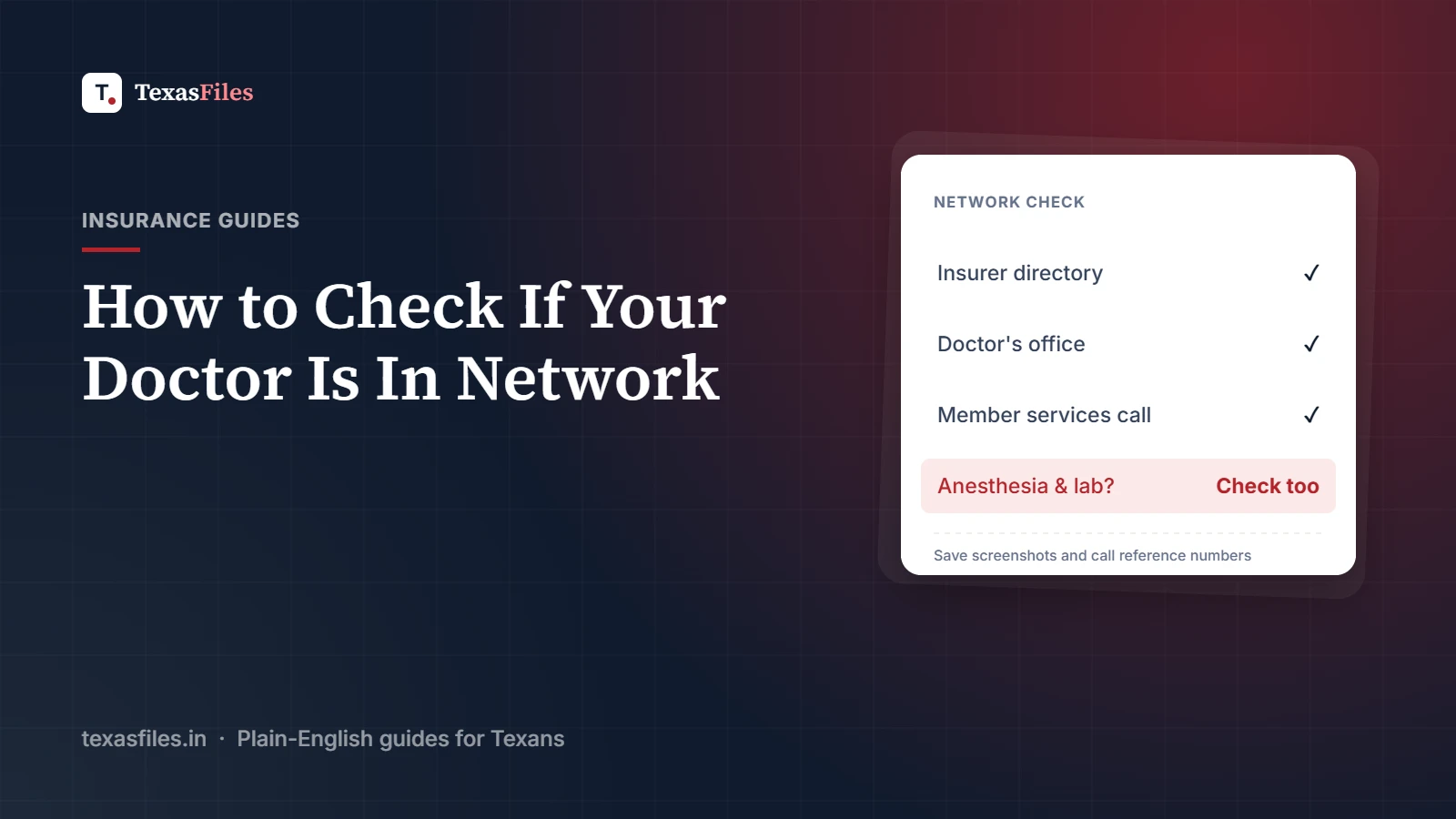
How to Check If a Doctor Is In Network (and Avoid Surprise Bills)
Provider directories are often wrong. Use this three-step check to confirm a doctor, hospital or lab is in your network before you book.
·3 min read