Coordination of Benefits: Who Pays First When You Have Two Health Plans
Have two health insurance plans? Learn the coordination of benefits rules, including the birthday rule and Medicare, and how to fix COB claim denials.
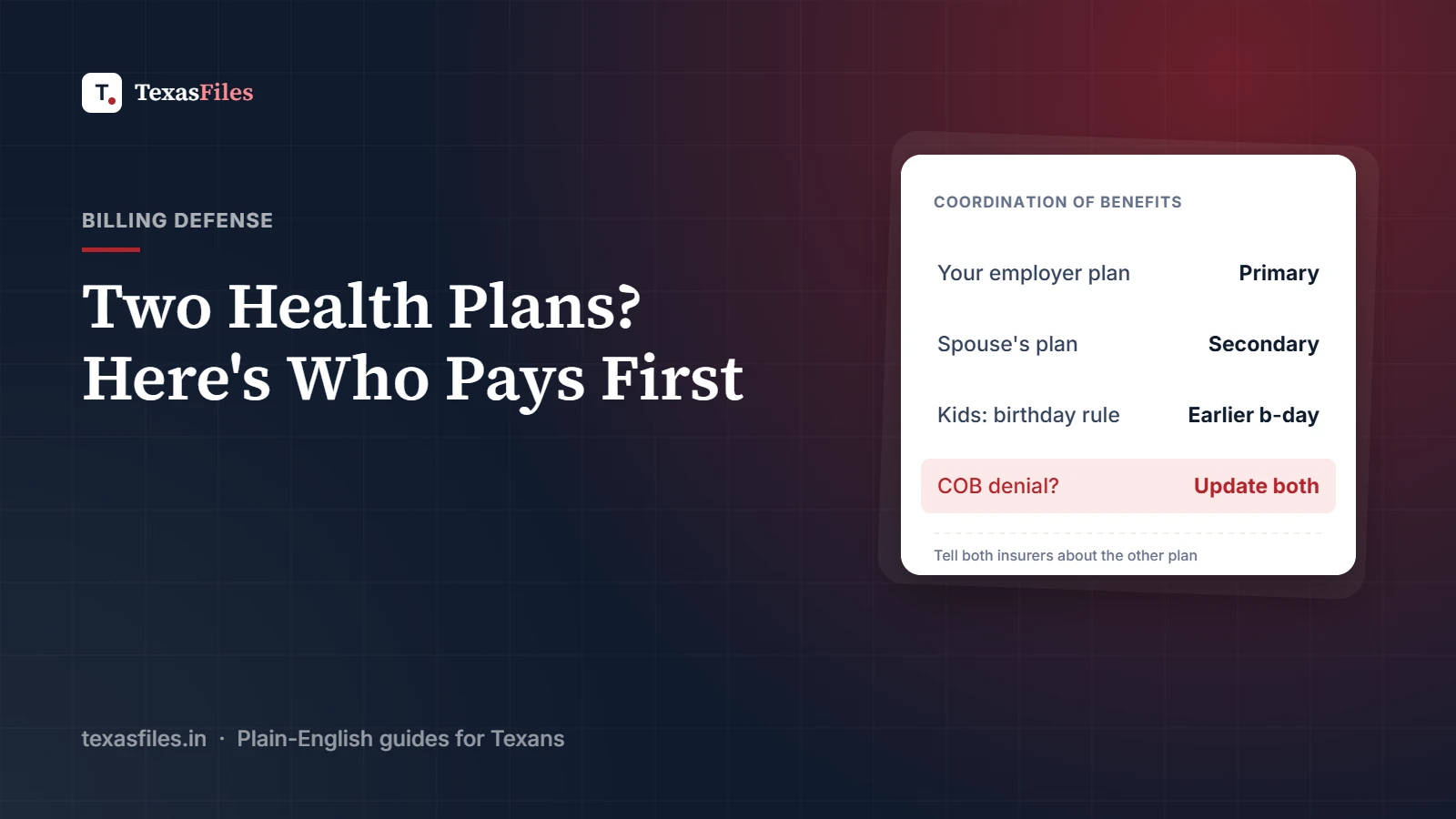
Having two health insurance plans sounds like a sure way to pay less for care. It can be. But it also creates confusion about which plan pays first, and if the insurers disagree, claims can get stuck or denied. The process that sorts this out is called coordination of benefits (COB).
Here's how it works, the rules insurers follow, and how to keep your claims moving.
What Is Coordination of Benefits?
When you're covered by more than one health plan, one plan is designated as primary and pays first according to its terms. The other plan is secondary and may pay some or all of what's left, such as your deductible or coinsurance. Coordination rules prevent the plans from paying more than the total cost of the care.
Common situations include:
Being covered by your own employer plan and a spouse's plan
Children covered by both parents' plans
Having Medicare and an employer plan or retiree coverage
Having both Medicare and Medicaid
Keeping COBRA while starting a new job's plan
Who Pays First? The Standard Rules
Most insurers follow model rules developed by the National Association of Insurance Commissioners, which Texas and most states use.
Your Own Plan vs. a Spouse's Plan
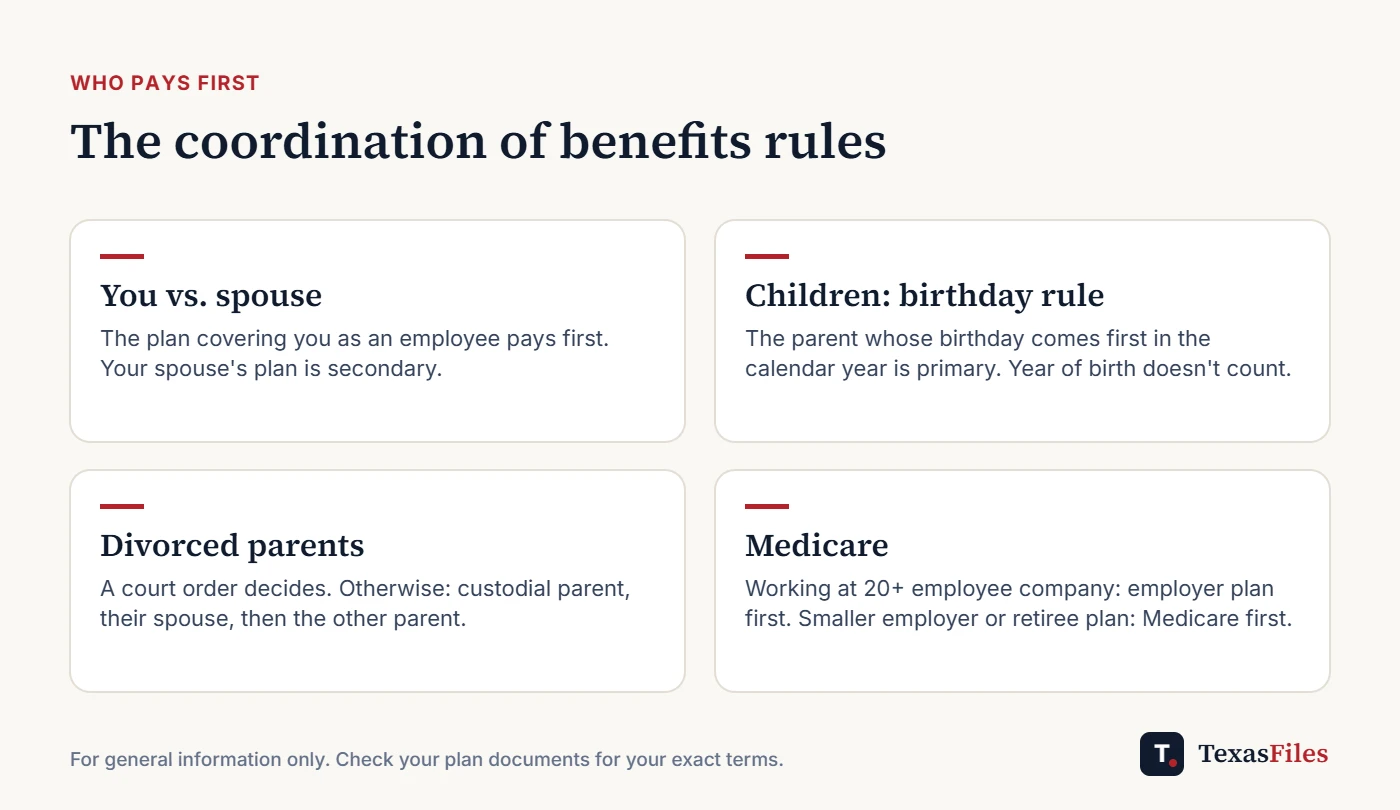
The plan that covers you as an employee is primary. The plan that covers you as a spouse or dependent is secondary.
Children Covered by Both Parents: The Birthday Rule
When parents are married or living together, the plan of the parent whose birthday falls earlier in the calendar year is primary. Only the month and day count, not the year of birth. If a mother's birthday is March 10 and a father's is August 2, the mother's plan pays first, regardless of who is older.
Children of Divorced or Separated Parents
If a court order says which parent is responsible for health coverage, that parent's plan is primary. Without a court order, the order is typically: the custodial parent's plan, then the custodial parent's spouse's plan, then the non-custodial parent's plan.
Active Employee vs. Retiree or COBRA Coverage
A plan that covers you as an active employee usually pays before a plan covering you as a retiree or through COBRA.
If None of These Apply
The plan that has covered the person the longest is generally primary.
Medicare Has Its Own Rules
Employer with 20 or more employees: If you're 65 or older and still working, your employer plan is generally primary and Medicare is secondary.
Employer with fewer than 20 employees: Medicare is generally primary.
Retiree coverage: Medicare is primary.
Medicaid: Medicaid is almost always the payer of last resort.
Getting this wrong can cause denials and, in some cases, gaps in coverage, so confirm with both plans.
Why Claims Get Denied for COB
One of the most common denial reasons on an Explanation of Benefits is "coordination of benefits" or "other insurance information needed." It usually means:
The insurer thinks you have other coverage but doesn't know which plan is primary
You haven't returned the insurer's annual "other coverage" questionnaire
The provider billed the secondary plan first
Your other coverage ended, but the insurer's records weren't updated
How to Fix COB Problems
Call both insurers: Tell each one about the other plan, including the policyholder name, member ID, and effective dates. Ask each to confirm which plan it has on file as primary.
Update your provider: Give the doctor's office both insurance cards and tell them which is primary.
Answer questionnaires promptly: Insurers often mail or email yearly forms asking whether you have other coverage. Ignoring them can freeze claims.
Ask for reprocessing: Once records are corrected, ask the insurer to reprocess the denied claims, and ask the provider to rebill in the right order.
Are Two Plans Worth Two Premiums?
Not always. A secondary plan may only pick up part of your remaining costs, and some secondary plans pay very little if the primary plan already paid well. Compare the extra premium against how much care your family realistically uses.
Frequently Asked Questions
Can I choose which plan is primary?
No. The rules decide, not you. Your choice is whether to keep both plans.
Will the secondary plan pay my entire remaining balance?
Not necessarily. It pays according to its own benefits, and may cover only part of what's left.
Do I have to tell my insurer about other coverage?
Yes. Plans require it, and failing to disclose other coverage can lead to denied claims or requests to repay benefits.
The Bottom Line
With two health plans, the primary plan pays first and the secondary plan may help with what's left. Know which is primary, keep both insurers and your providers informed, and respond quickly to COB questionnaires to keep claims from getting stuck.
Keep reading
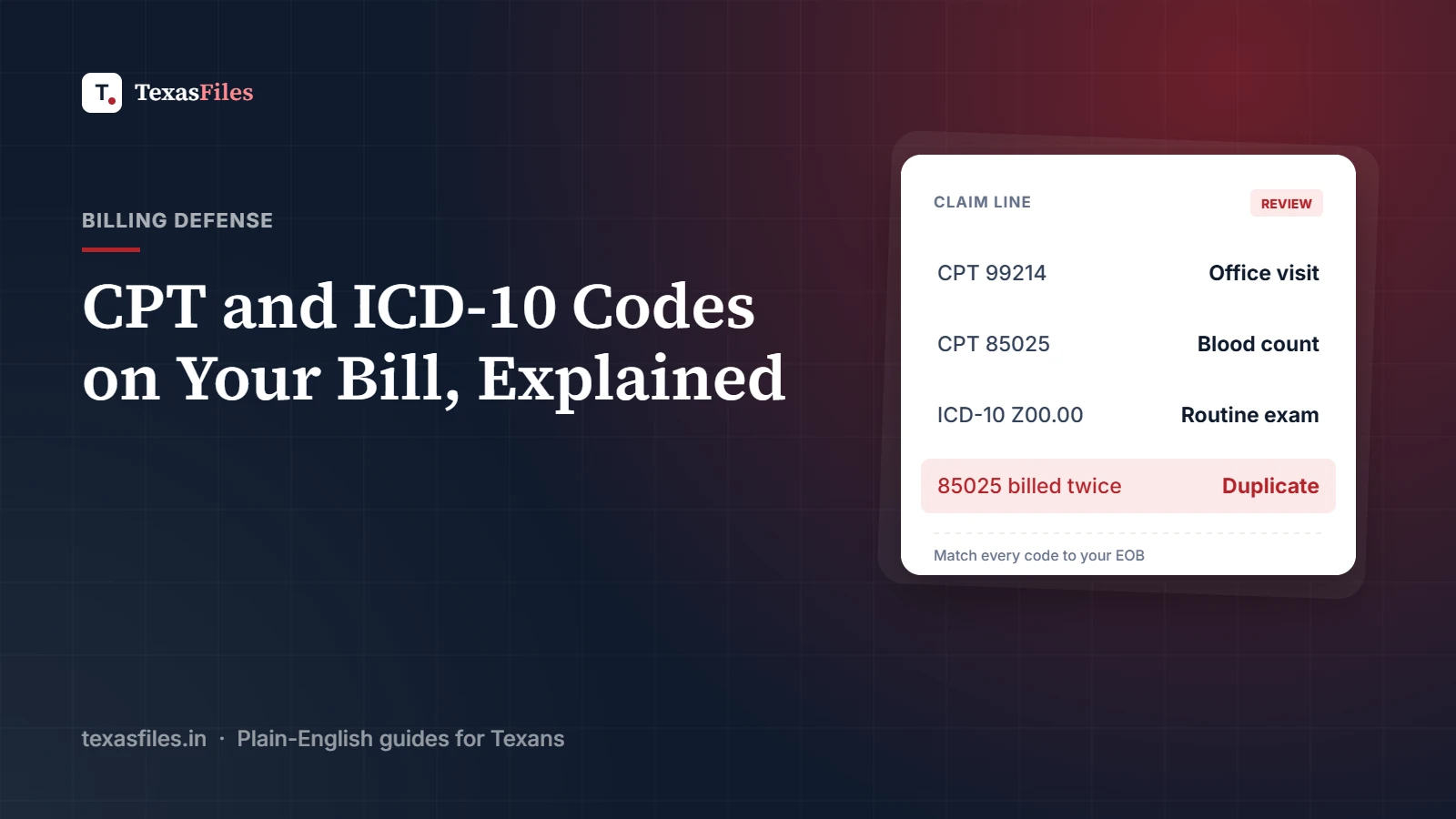
CPT and ICD-10 Codes on Your Medical Bill, Explained
What CPT, HCPCS and ICD-10 codes on your medical bill mean, the most common coding errors, and how to check and dispute them.
·4 min read
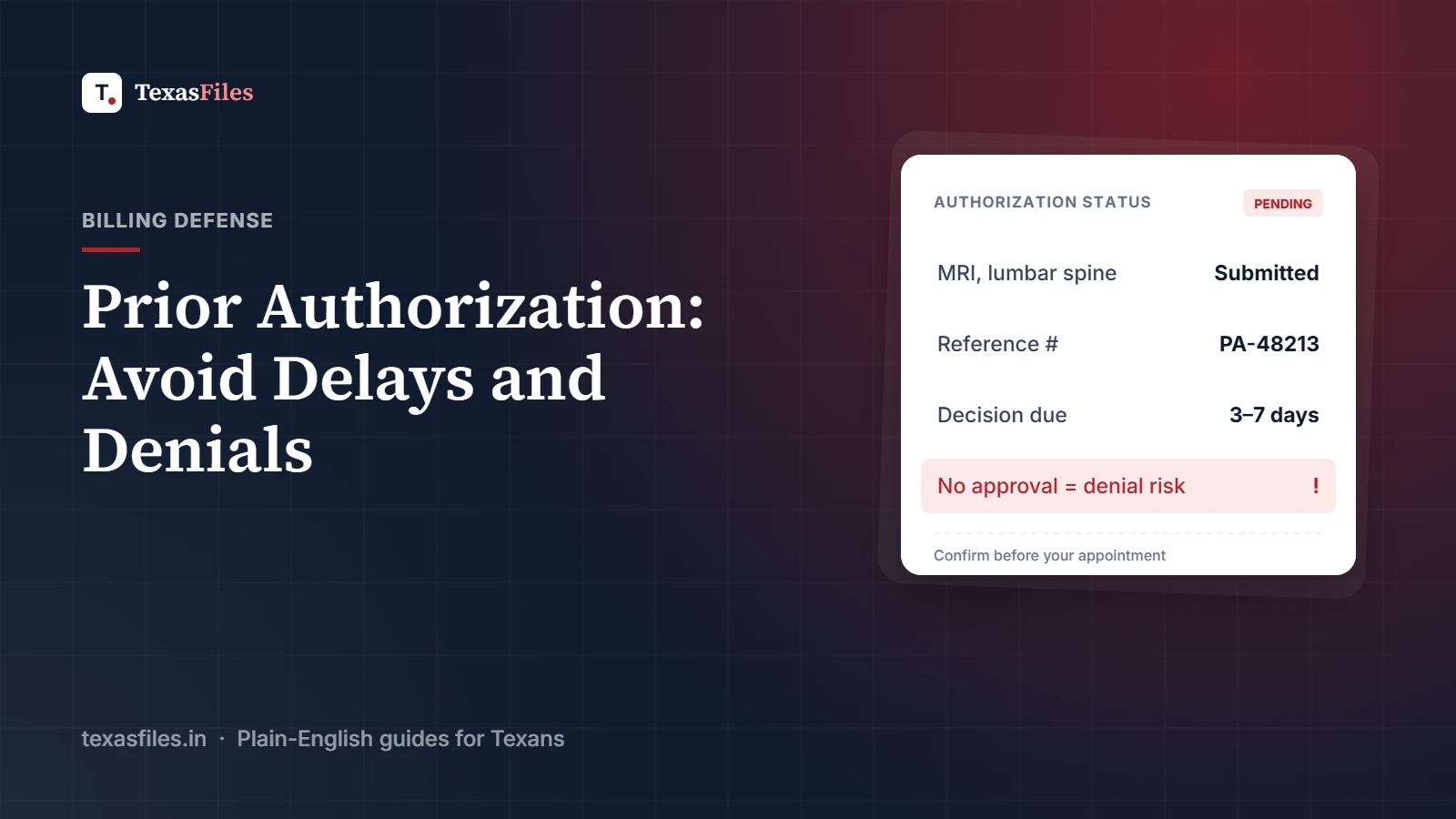
Prior Authorization Explained: How to Avoid Delays and Denied Claims
What prior authorization is, which services need it, how long it takes and what to do if your insurer denies it, including Texas gold card rules.
·4 min read
Hospital Financial Assistance in Texas: How to Get Charity Care
Nonprofit hospitals must offer financial assistance. Learn who qualifies for free or discounted care in Texas and exactly how to apply.
·4 min read