CPT and ICD-10 Codes on Your Medical Bill, Explained
What CPT, HCPCS and ICD-10 codes on your medical bill mean, the most common coding errors, and how to check and dispute them.
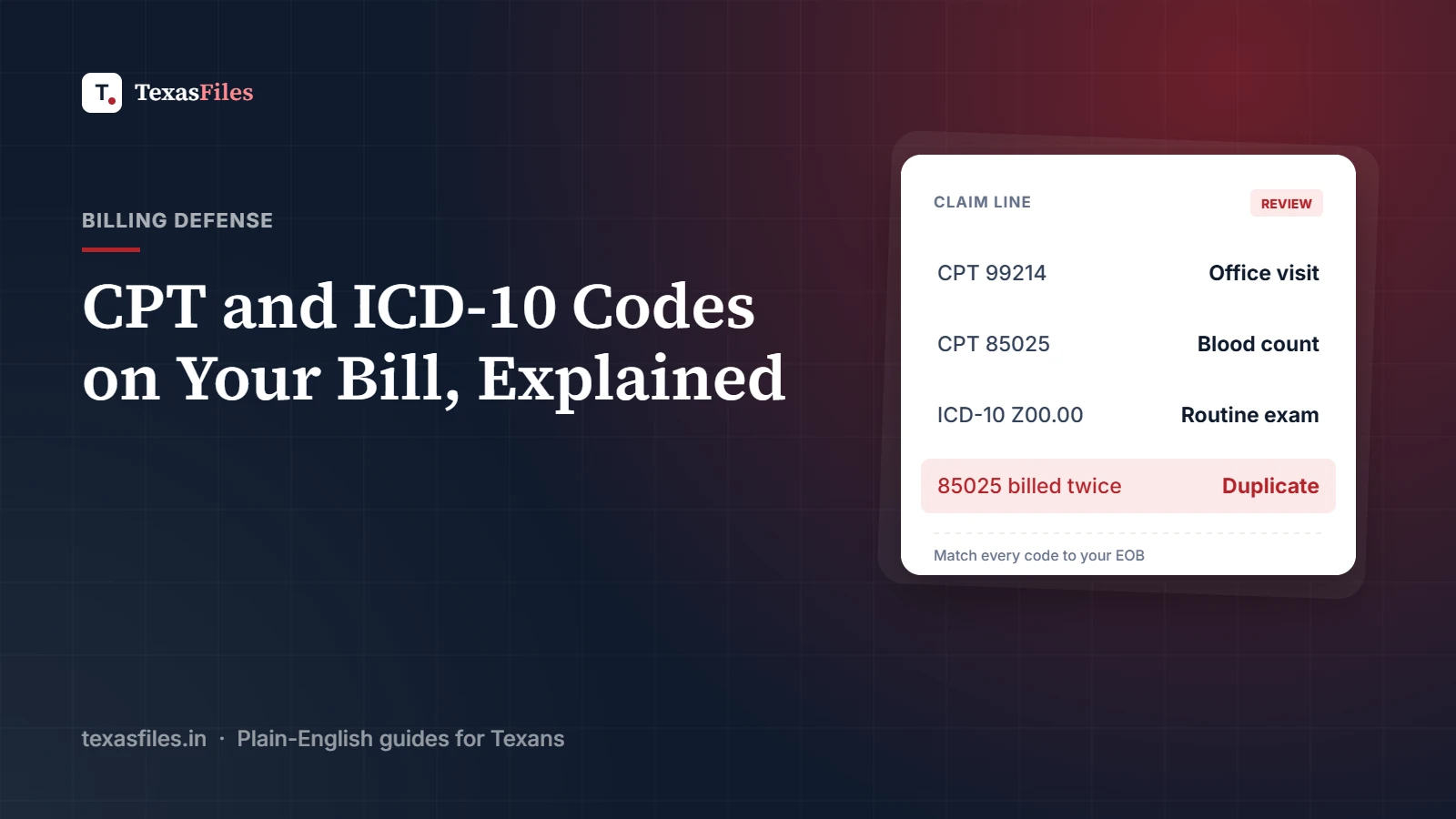
Look at an itemized medical bill or an Explanation of Benefits, and you'll see strings of numbers and letters next to every charge, such as 99213, 80053, or J45.909. These are medical billing codes. They tell your insurance company exactly what was done and why. Understanding the basics can help you catch errors, understand denials, and avoid paying for services you never received.
Here's a plain-English guide to the codes that matter most on your bill.
The Two Codes Behind Every Claim
Every medical claim answers two questions:
What was done? That's the procedure code, usually a CPT or HCPCS code.
Why was it done? That's the diagnosis code, an ICD-10-CM code.
Insurers use both to decide whether and how much to pay. A service that doesn't match a diagnosis that justifies it is a common reason for denial.
CPT Codes: What Was Done
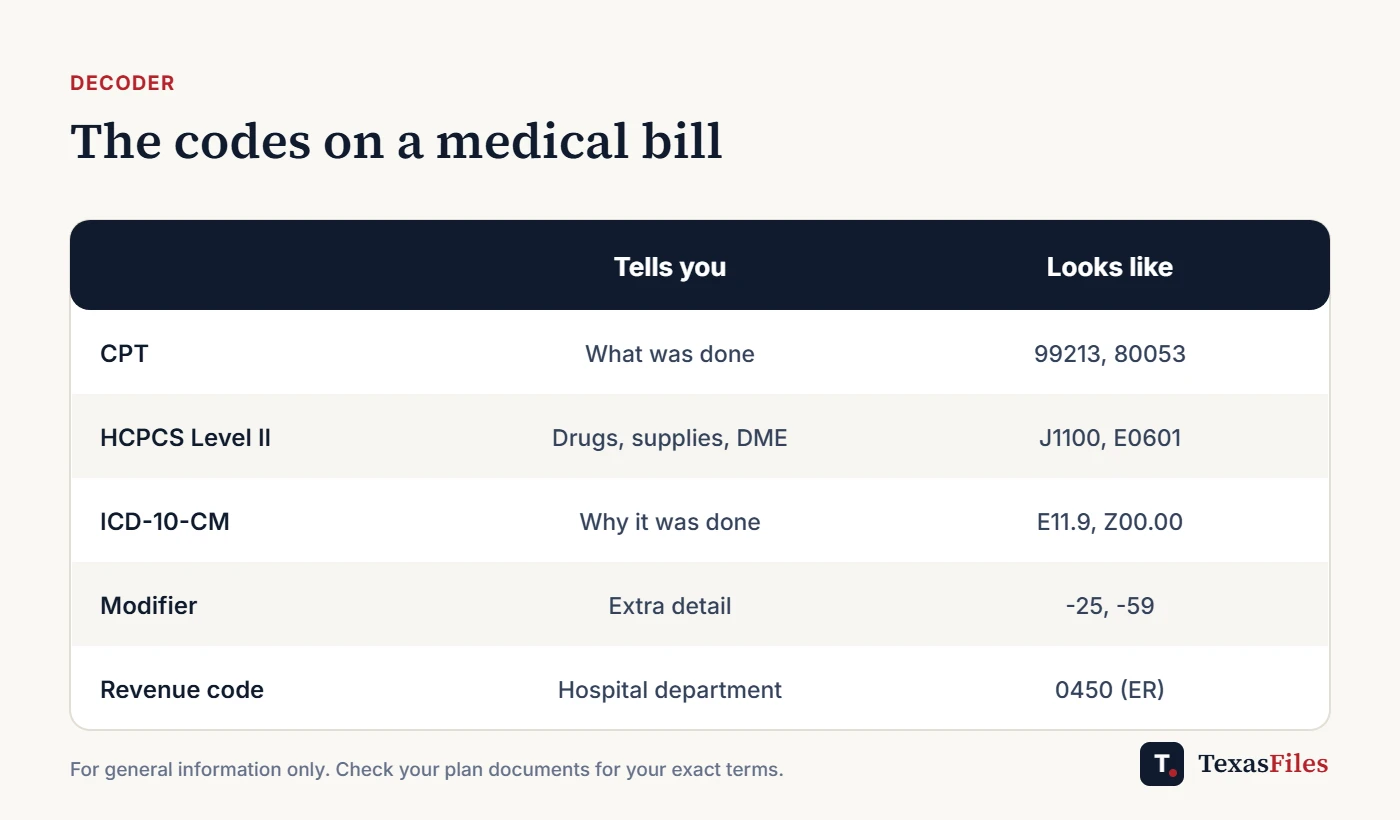
Current Procedural Terminology (CPT) codes are five-digit codes maintained by the American Medical Association. They describe medical, surgical, and diagnostic services.
Office visits: Codes 99202 to 99205 are for new patients, and 99211 to 99215 are for established patients. Higher numbers mean more complex visits and higher charges.
Preventive visits: A separate set of codes covers annual wellness and preventive exams.
Lab tests: For example, 80053 is a comprehensive metabolic panel and 85025 is a complete blood count.
Imaging and procedures: Codes describe X-rays, MRIs, surgeries, and injections.
You may also see modifiers, two-character add-ons such as -25 or -59, that give extra detail. For example, modifier -25 indicates a significant, separate service was performed on the same day as another service.
HCPCS Codes: Supplies, Drugs, and More
Healthcare Common Procedure Coding System (HCPCS) Level II codes start with a letter followed by four numbers. They cover items CPT doesn't, such as:
Drugs given in a clinic or hospital, which often start with J
Ambulance services, which start with A
Durable medical equipment, like wheelchairs and oxygen supplies, which often start with E or K
ICD-10 Codes: Why It Was Done
ICD-10-CM diagnosis codes describe your condition or the reason for the visit. They start with a letter and can be up to seven characters, such as E11.9 for type 2 diabetes without complications or Z00.00 for a routine adult exam. The "Z" codes are especially important: they often signal a preventive visit, which many plans must cover at no cost.
Revenue Codes on Hospital Bills
Hospital bills often include four-digit revenue codes that group charges by department, such as room and board, pharmacy, laboratory, or emergency room. These help you see where charges came from, but they're less specific than CPT codes, which is why you should always request a fully itemized bill.
Common Coding Errors to Watch For
Duplicate charges: The same code billed twice for a service you received once.
Upcoding: A higher-level code than the service justified, such as a complex visit code for a brief follow-up.
Unbundling: Separate charges for services that should be billed together under one code.
Wrong diagnosis code: A preventive exam coded as a problem visit, which can turn a free checkup into a bill.
Services not received: Tests or supplies you never got.
Wrong dates or patient information: Simple errors that can trigger denials.
How to Check the Codes on Your Bill
Request an itemized bill with CPT or HCPCS codes, not just a summary.
Compare it to your EOB: The codes and dates should match what your insurer processed. See our guide to reading your EOB.
Look up codes you don't recognize: Search the code online, or ask the billing office to explain what it means.
Ask about the visit level: If you were charged for a high-level visit that seemed brief, ask the provider to review the coding.
Dispute errors in writing: List each incorrect line item, explain the problem, and request a corrected bill and resubmitted claim.
Frequently Asked Questions
Can I change a diagnosis code?
Only the provider can correct coding, and only to accurately reflect what happened. But you can ask them to review it if you believe it's wrong.
Why was my free preventive visit billed?
Often because a problem was discussed during the visit and billed separately, or the visit was coded with a diagnosis instead of a preventive code. Ask the office to review the coding.
Where can I find prices for codes?
Many insurers offer cost estimator tools, and hospitals must post prices for many services under federal price transparency rules.
The Bottom Line
CPT and HCPCS codes describe what was done, and ICD-10 codes describe why. You don't have to be a billing expert to use them. Request an itemized bill, compare it with your EOB, and question anything that doesn't match your visit.
Keep reading
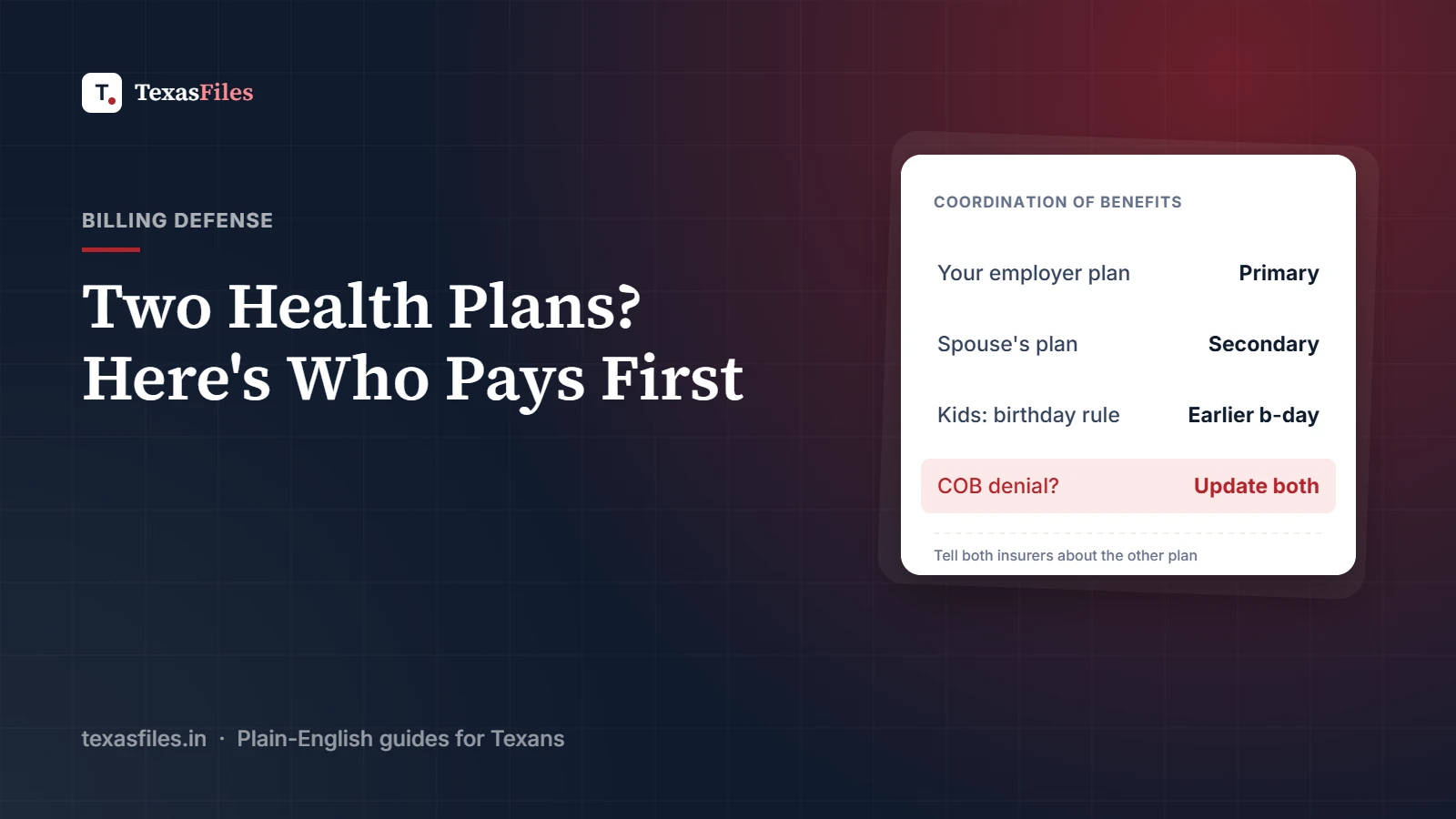
Coordination of Benefits: Who Pays First When You Have Two Health Plans
Have two health insurance plans? Learn the coordination of benefits rules, including the birthday rule and Medicare, and how to fix COB claim denials.
·4 min read
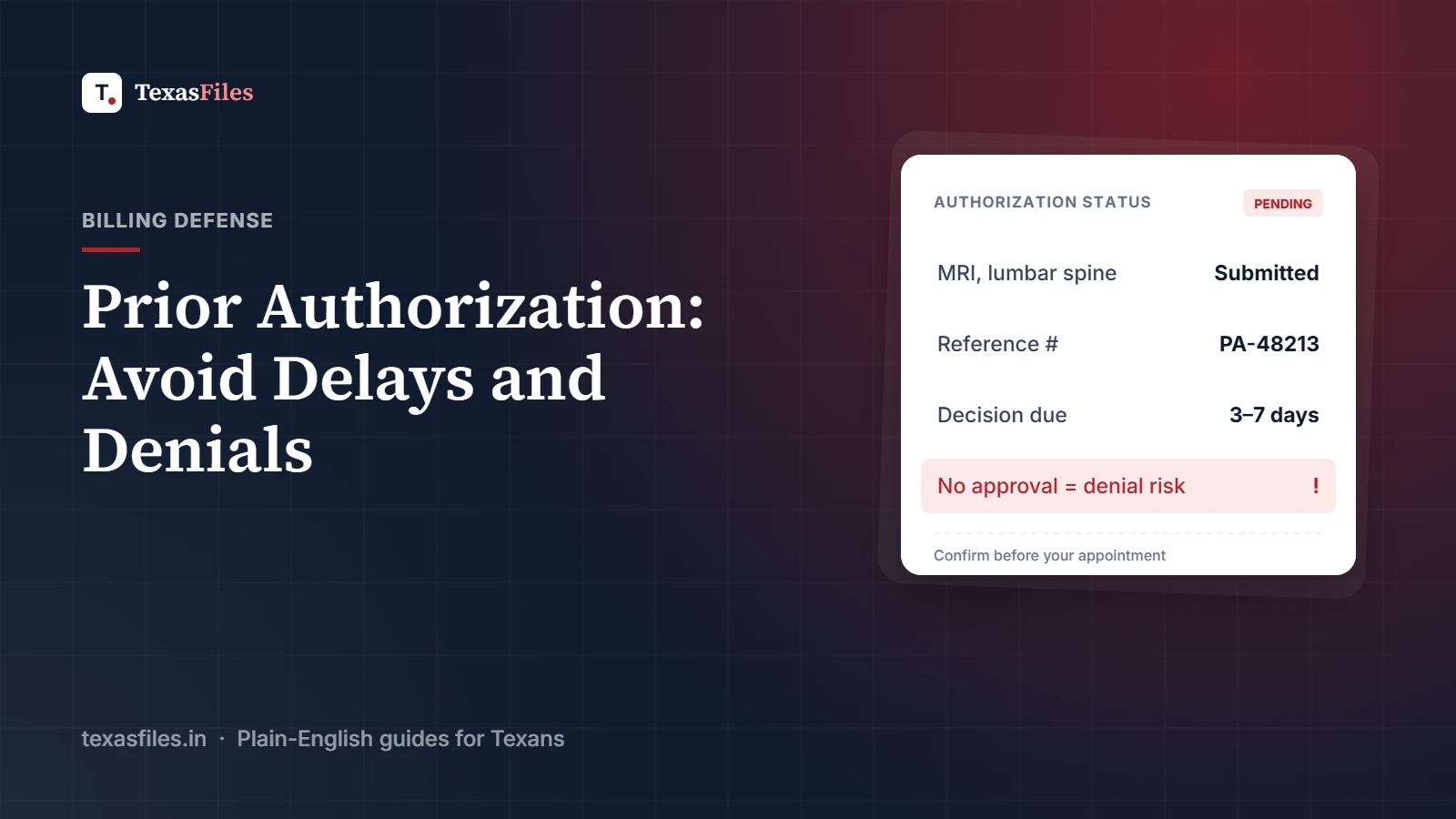
Prior Authorization Explained: How to Avoid Delays and Denied Claims
What prior authorization is, which services need it, how long it takes and what to do if your insurer denies it, including Texas gold card rules.
·4 min read
Hospital Financial Assistance in Texas: How to Get Charity Care
Nonprofit hospitals must offer financial assistance. Learn who qualifies for free or discounted care in Texas and exactly how to apply.
·4 min read