Prior Authorization Explained: How to Avoid Delays and Denied Claims
What prior authorization is, which services need it, how long it takes and what to do if your insurer denies it, including Texas gold card rules.
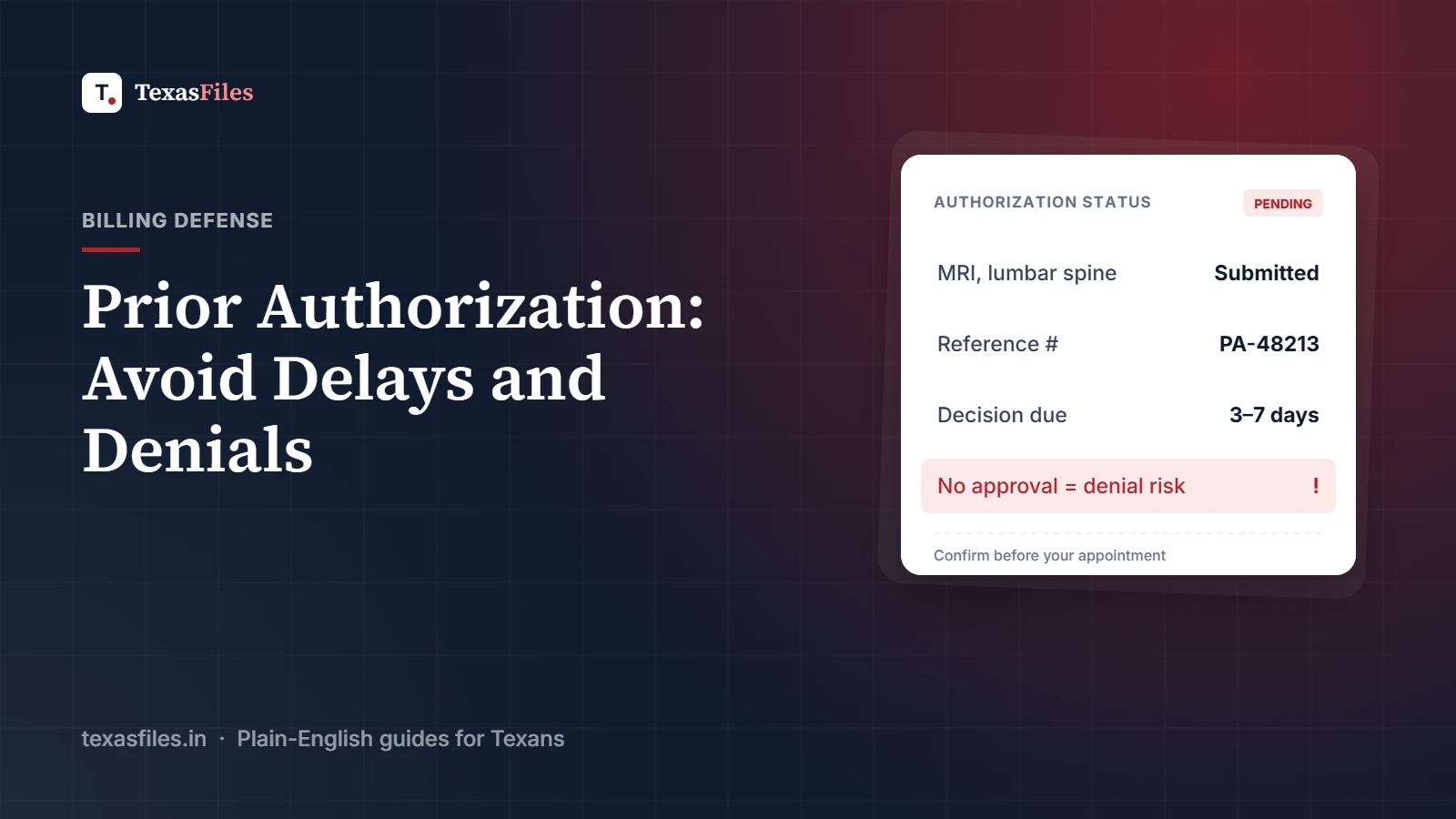
Your doctor orders an MRI, a specialty medication, or a surgery, and then everything stalls. The reason is often prior authorization: your insurance company's requirement to approve certain treatments before you receive them. Skip it, and the insurer can deny the claim even when the care was clearly needed, leaving you with the bill.
This guide explains how prior authorization works, which services usually need it, and how to keep it from delaying your care or turning into a denial.
What Is Prior Authorization?
Prior authorization (also called pre-authorization, pre-certification, or prior approval) is a process in which your doctor asks your health plan to confirm that a treatment is medically necessary and covered before it's performed. The insurer reviews your records against its clinical criteria and approves, denies, or asks for more information.
Insurers say it controls costs and prevents unnecessary care. Patients and doctors often experience it as paperwork and delay. Either way, it's something you need to manage.
Services That Commonly Require Prior Authorization
Advanced imaging, such as MRI, CT, and PET scans
Planned surgeries and hospital admissions
Specialty and brand-name prescription drugs, especially expensive injectables
Durable medical equipment, like CPAP machines and power wheelchairs
Physical, occupational, and speech therapy beyond a set number of visits
Home health care and skilled nursing facility stays
Some mental health and substance use treatment programs
Genetic testing
Requirements vary by plan. Your plan documents or member portal should include a list of services that need approval.
Who Is Responsible for Getting It?
For in-network care, the provider's office usually submits the request. But if something goes wrong, you may be the one facing the bill, so it pays to confirm. With out-of-network care, the responsibility often falls on you.
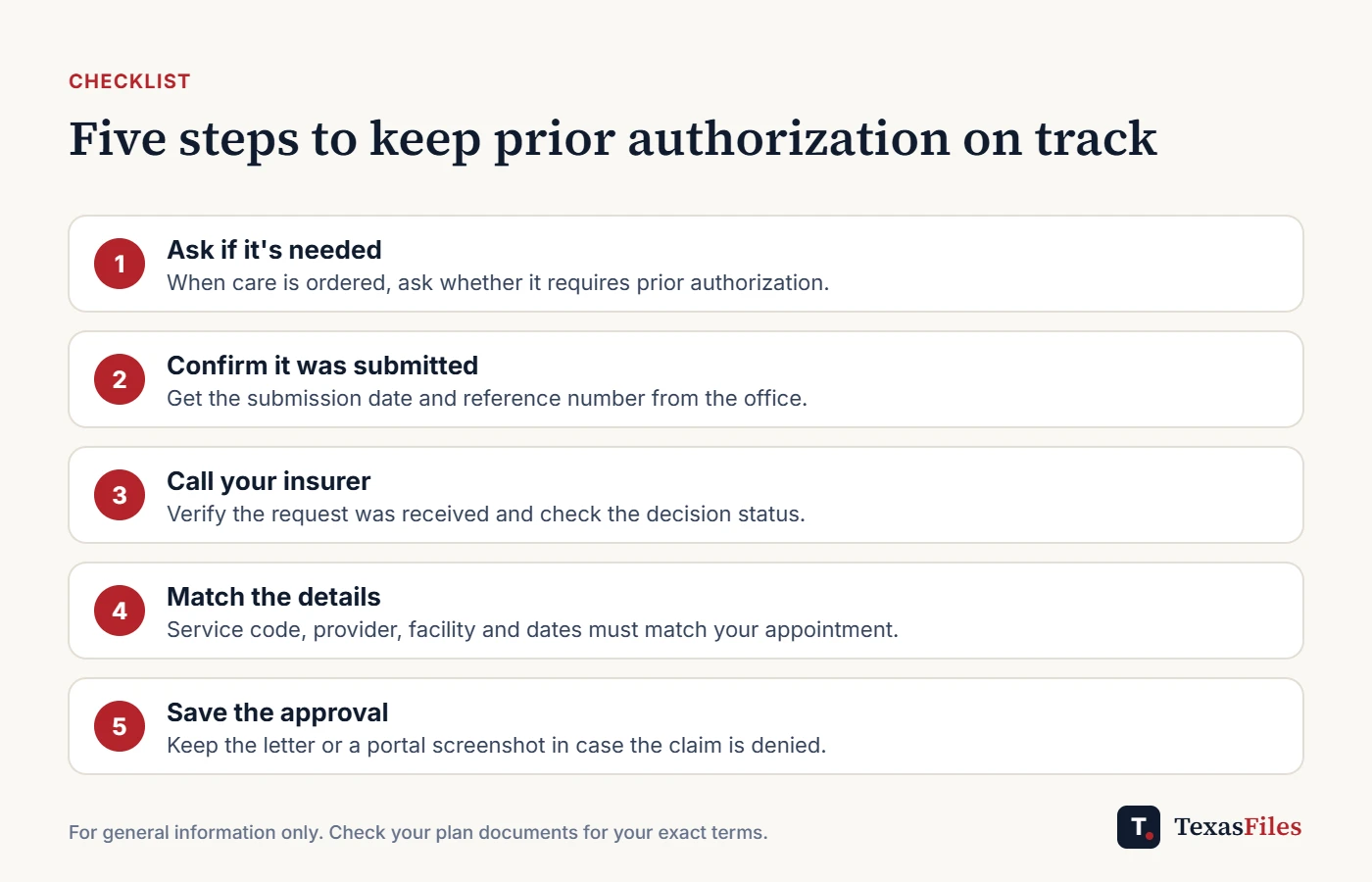
How to Keep Prior Authorization on Track
Ask at the start: When your doctor orders a test, procedure, or drug, ask, "Does this need prior authorization, and has it been submitted?"
Get the details: Ask for the date it was submitted and any reference number.
Call your insurer: A few days later, call the member services number on your card and confirm the request was received and whether a decision has been made.
Confirm the specifics: Approvals are often tied to a specific service code, provider, facility, number of visits, and date range. If your surgery moves to a different hospital or date, the approval may need updating.
Get it in writing: Save the approval letter or a screenshot from your portal.
How Long Does It Take?
Standard requests often take several business days to a couple of weeks, depending on the plan and the service. Urgent requests, where waiting could seriously harm your health, must be handled much faster. Federal rules now require many plans to meet firmer decision deadlines and to give a specific reason when they deny a request, with most of these requirements taking effect in 2026 and 2027. If your care is time-sensitive, ask your doctor to mark the request as urgent.
What to Do If It's Denied
Find out why: Ask the insurer for the specific reason and the clinical criteria it used.
Ask for a peer-to-peer review: Your doctor can often speak directly with the insurer's medical reviewer. Many denials are reversed at this stage.
Resubmit with more information: Denials frequently happen because records were missing. A stronger letter of medical necessity can change the outcome.
Appeal: You have the right to a formal appeal and, if needed, an independent external review. See our guide to appealing a denied claim in Texas.
Texas "Gold Card" Rules
Texas passed a law in 2021 that exempts some doctors from prior authorization requirements for certain services if the insurer approved at least 90% of their requests for those services over a review period. It applies to state-regulated plans, not to self-funded employer plans. If your doctor has an exemption, it can speed up care considerably.
Frequently Asked Questions
Can I get care before prior authorization is approved?
You can, but you risk paying the full cost if the insurer later denies it. For non-urgent care, it's usually best to wait for approval. Emergency care never requires prior authorization.
Does prior authorization guarantee payment?
Not always. It confirms medical necessity, but the claim can still be affected by eligibility, your deductible, or billing errors.
Do I need prior authorization for prescriptions?
For some drugs, yes. Your plan's drug list, called a formulary, marks drugs that need prior authorization or step therapy.
The Bottom Line
Prior authorization is one of the most common reasons claims get denied. Ask whether it's needed, confirm it was submitted, verify the approval details, and keep a written copy. A few phone calls up front can save you from a large bill later.
Keep reading
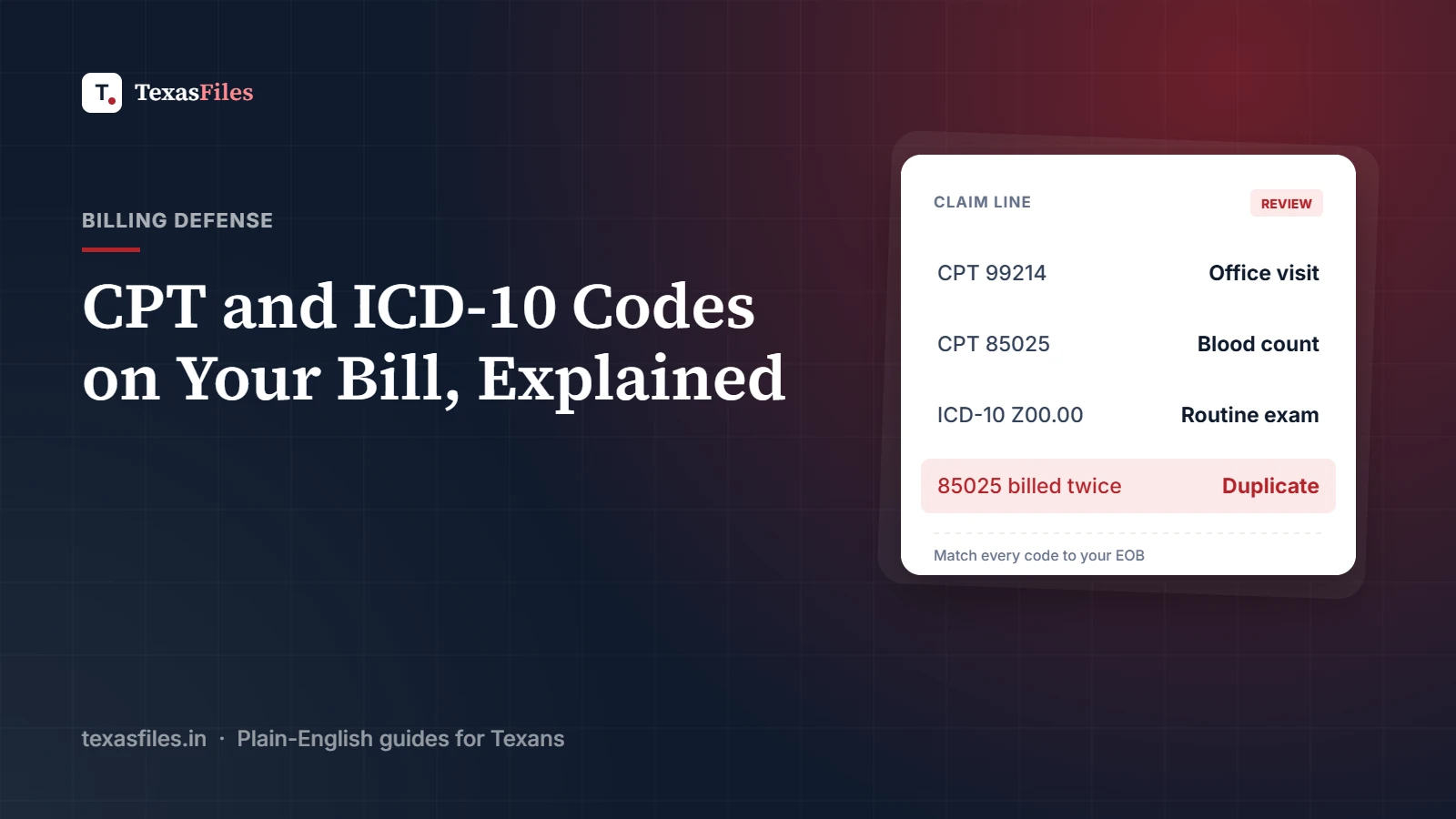
CPT and ICD-10 Codes on Your Medical Bill, Explained
What CPT, HCPCS and ICD-10 codes on your medical bill mean, the most common coding errors, and how to check and dispute them.
·4 min read
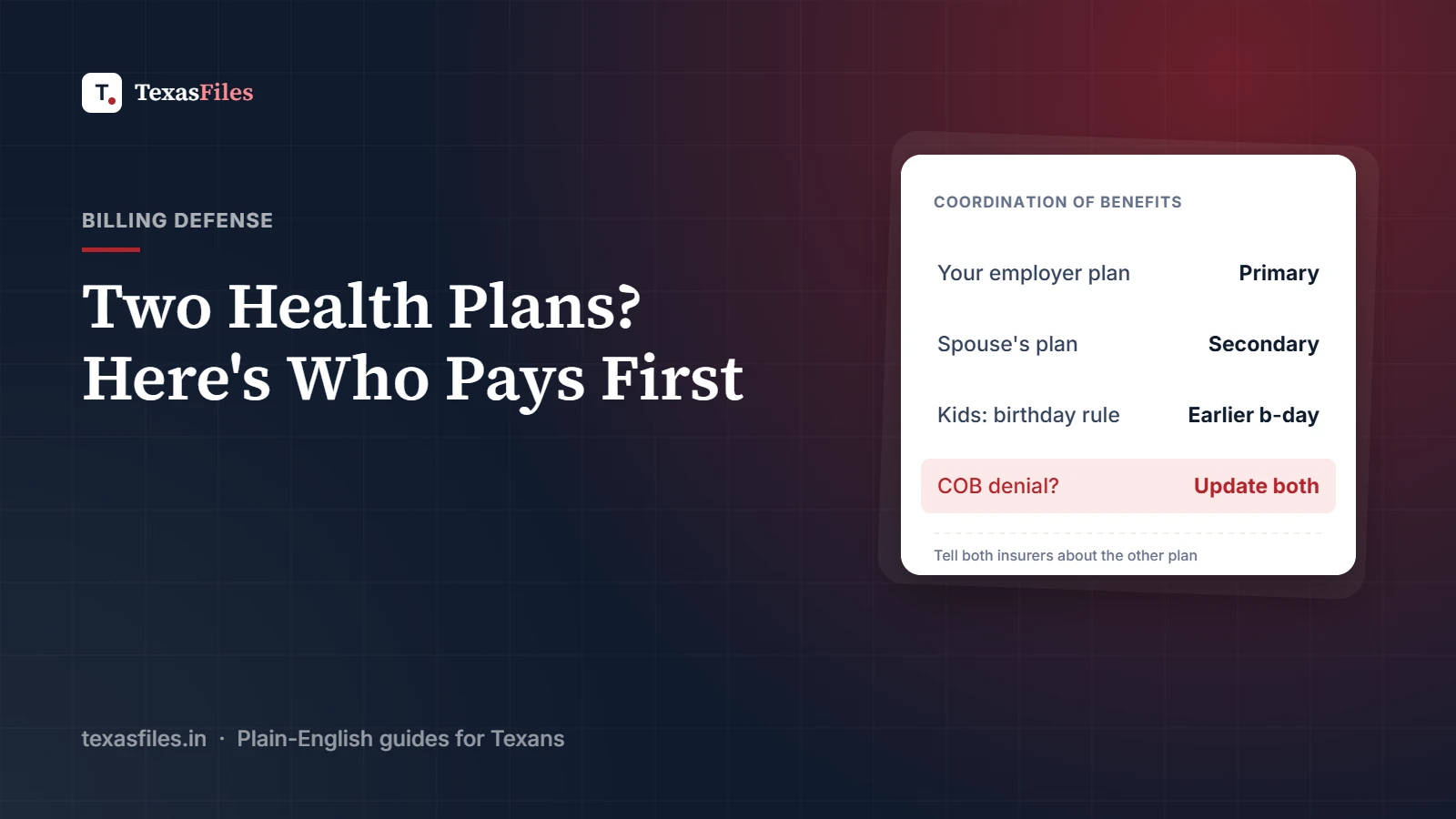
Coordination of Benefits: Who Pays First When You Have Two Health Plans
Have two health insurance plans? Learn the coordination of benefits rules, including the birthday rule and Medicare, and how to fix COB claim denials.
·4 min read
Hospital Financial Assistance in Texas: How to Get Charity Care
Nonprofit hospitals must offer financial assistance. Learn who qualifies for free or discounted care in Texas and exactly how to apply.
·4 min read