CO-22 Denial: How to Fix Coordination of Benefits Denials
What a CO-22 denial means, who pays first under COB and Medicare Secondary Payer rules, and a step-by-step process to get COB updated and claims reprocessed.
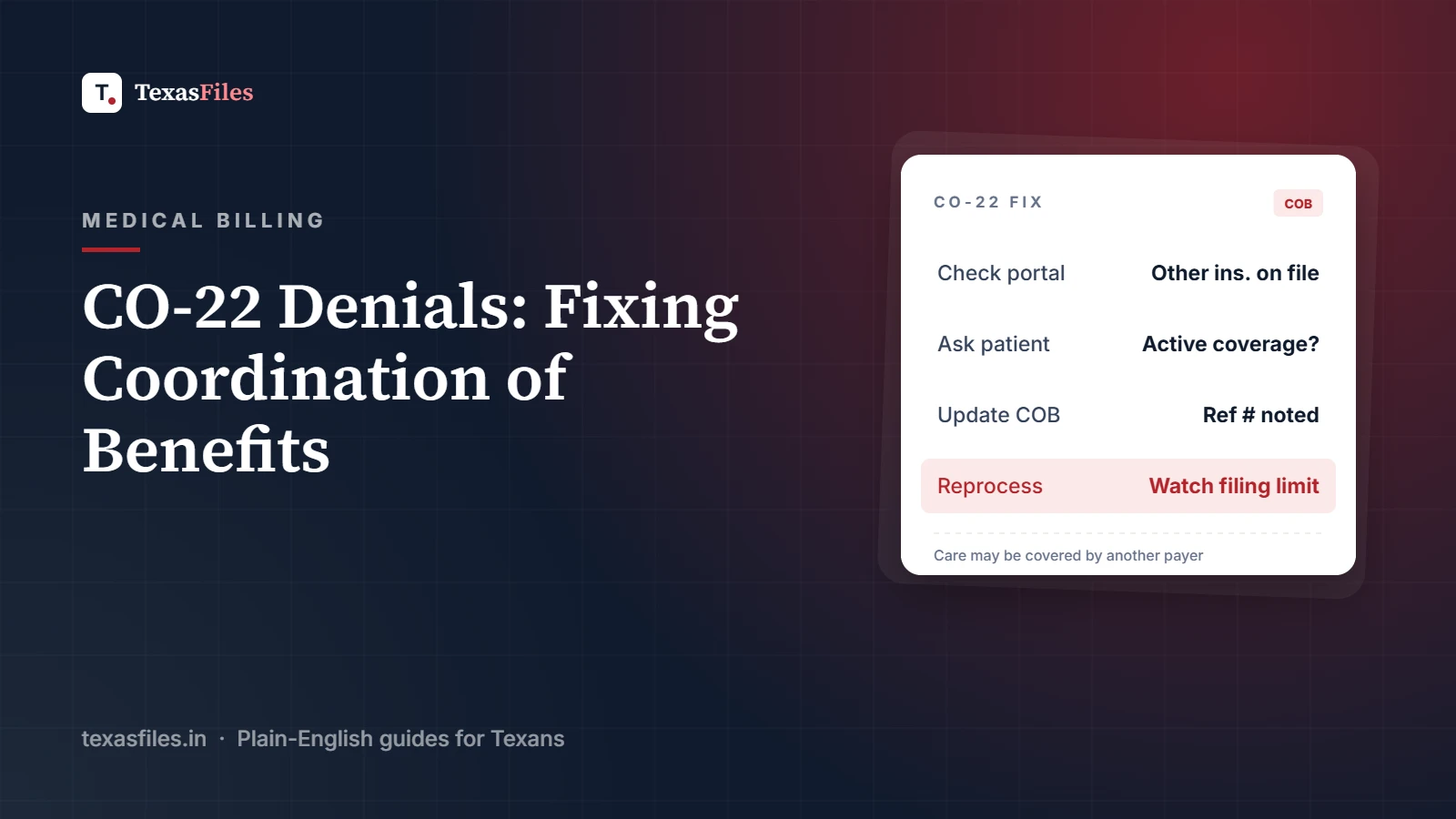
CO-22 is one of the most frustrating denials in claim follow-up because, most of the time, nothing is wrong with the claim. The payer simply believes another insurance plan should pay first. Sometimes that's true. Very often it isn't: the patient's other coverage ended years ago, or the payer's coordination of benefits (COB) record was never updated. Either way, the claim won't pay until the COB question is answered.
This guide explains what CO-22 means, how payers decide who pays first, and a step-by-step process billers can use to get these claims reprocessed quickly.
What CO-22 Means
The official X12 description of reason code 22 is: "This care may be covered by another payer per coordination of benefits." With group code CO, the provider can't move the balance to the patient. The payer is saying: until we know which plan is primary, we won't pay as primary.
You'll often see it with remark codes like MA92 ("Missing plan information for other insurance") or, on secondary claims, MA04 ("Secondary payment cannot be considered without the identity of or payment information from the primary payer") and N4 (missing or invalid prior insurance EOB).
Why CO-22 Denials Happen
The COB record is outdated or incomplete. Many payers periodically ask members whether they have other coverage. If the patient never answers, some payers pend or deny claims until they do.
The patient really has two plans, such as their own employer plan plus a spouse's plan, and you billed the secondary plan first.
Medicare and another plan overlap, and the order is wrong for the patient's situation (for example, still working at a large employer).
A dependent child is covered by both parents, and the birthday rule or a court order decides who is primary.
An accident or work injury may make auto, liability or workers' compensation coverage primary.
Who Pays First: The Basic COB Rules
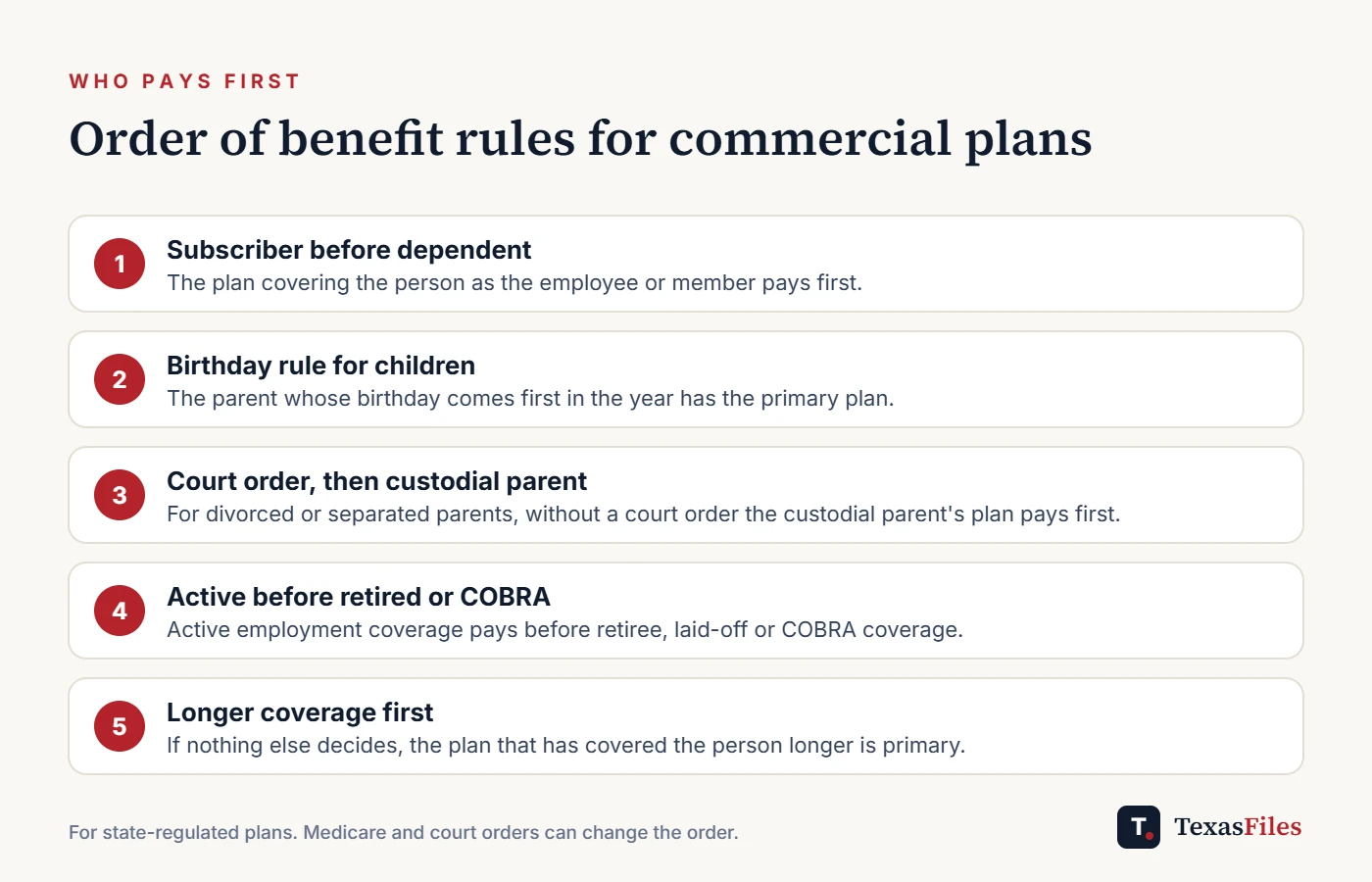
For state-regulated commercial plans, the order is set by insurance rules. In Texas these are in 28 TAC §3.3507, and most states use very similar rules. The plans apply these rules in order and stop at the first one that decides:
Subscriber before dependent. The plan that covers the person as an employee, member or subscriber pays before the plan that covers them as a dependent.
Birthday rule for children. For a child of married or cohabiting parents, the plan of the parent whose birthday comes first in the calendar year is primary (month and day only, not year).
Divorced or separated parents. A court order that assigns health coverage controls. Without one, the custodial parent's plan pays first, then the custodial parent's spouse's plan, then the noncustodial parent's plan.
Active before retired. Coverage through active employment pays before retiree or laid-off coverage.
Employer plan before COBRA. COBRA or state continuation coverage is secondary to an active employer plan.
Longer coverage first. If nothing else decides, the plan that has covered the person longer is primary.
Patients can read our plain-English version of these rules in coordination of benefits: who pays first when you have two health plans.
When Medicare Is Involved
Medicare follows its own Medicare Secondary Payer (MSP) rules. The most common situations billers run into:
Age 65+ and still working: if the employer has 20 or more employees, the employer group plan pays first and Medicare is secondary. With fewer than 20 employees, Medicare is generally primary.
Under 65 with Medicare due to disability: the employer plan pays first if the employer has 100 or more employees.
End-Stage Renal Disease: the group health plan pays first during a 30-month coordination period.
Retiree coverage is secondary to Medicare.
Workers' compensation, no-fault and liability insurance pay first for the related injury or illness.
Medicaid is almost always the payer of last resort.
When Medicare's own records are wrong, the patient or provider contacts Medicare's Benefits Coordination & Recovery Center (BCRC) to update them. A Medicare Secondary Payer questionnaire at intake prevents most of these problems.
How to Fix a CO-22 Denial: Step by Step
1. Check the remit and the payer portal. Look at which other coverage the payer has on file. Portals such as Availity, UnitedHealthcare's provider portal and Cigna for HCP often show the other carrier and the dates the payer has on record.
2. Ask the patient. Confirm whether they have other active coverage today and on the date of service. Get a copy of any other insurance card, and confirm employment status if Medicare is involved.
3. If there's no other coverage, have the COB updated. Many payers require the member, not the provider, to confirm COB. The patient can usually do this with a short phone call to member services or online in the member portal. Some payers will accept the update from the provider's office on a call. Ask for a reference number.
4. If there is other coverage, bill the primary. Send the claim to the correct primary payer. When it's processed, bill the secondary with the primary's payment information (COB loop data electronically, or the primary EOB attached on paper).
5. Ask for reprocessing. Once COB is updated, call the payer and ask them to reprocess the denied claim, or submit a corrected claim if their policy requires it. Note the call reference number.
6. Watch the filing deadline. Time spent waiting for a COB update still counts against timely filing. If the primary payer changes, the deadline to bill the new primary is still running. Document every step in case you need to prove timely filing later.
How to Prevent CO-22 Denials
Ask every patient about other coverage at every visit, not just at registration.
Use a Medicare Secondary Payer questionnaire for Medicare patients.
Run eligibility checks before the visit and look for other-payer information in the response.
Remind patients to answer their insurer's COB letters or calls. A five-minute call from the patient can release weeks of held claims.
Track CO-22 denials by payer. A spike from one payer usually means it started a new COB verification campaign.
Frequently Asked Questions
Can I bill the patient for a CO-22 denial?
Not while the group code is CO. The balance stays with the payers until coordination of benefits is resolved. If the patient refuses to update their COB information, follow your office's financial policy, which may allow billing the patient after reasonable notice.
Who has to update coordination of benefits, the patient or the provider?
It depends on the payer. Many payers require the member to confirm other coverage themselves. Some accept the update from the provider's office. When in doubt, ask the payer and help the patient make the call.
How long does it take to reprocess a claim after COB is updated?
Usually days to a few weeks. Ask the payer to reprocess the specific claim once COB is updated rather than waiting for them to find it on their own.
What is the birthday rule?
When a child is covered by both parents' plans, the plan of the parent whose birthday falls earlier in the calendar year is primary. Only the month and day count.
The Bottom Line
A CO-22 denial is a question, not a final answer. Find out what the payer has on file, confirm the truth with the patient, get the record updated, and ask for reprocessing, all while keeping an eye on the filing deadline.
Sources
Written by Ashim
Ashim works in US medical billing and revenue cycle management, handling claim follow-up, denials and appeals every day.
Read our editorial policy. Spotted something outdated? Tell us.
Keep reading
Common Causes of CO-97 Denials (and How to Fix Them)
CO-97 means the payer bundled a service into another one. Learn the common causes, like NCCI edits, missing modifiers, and global periods, and how to fix them.
·4 min read
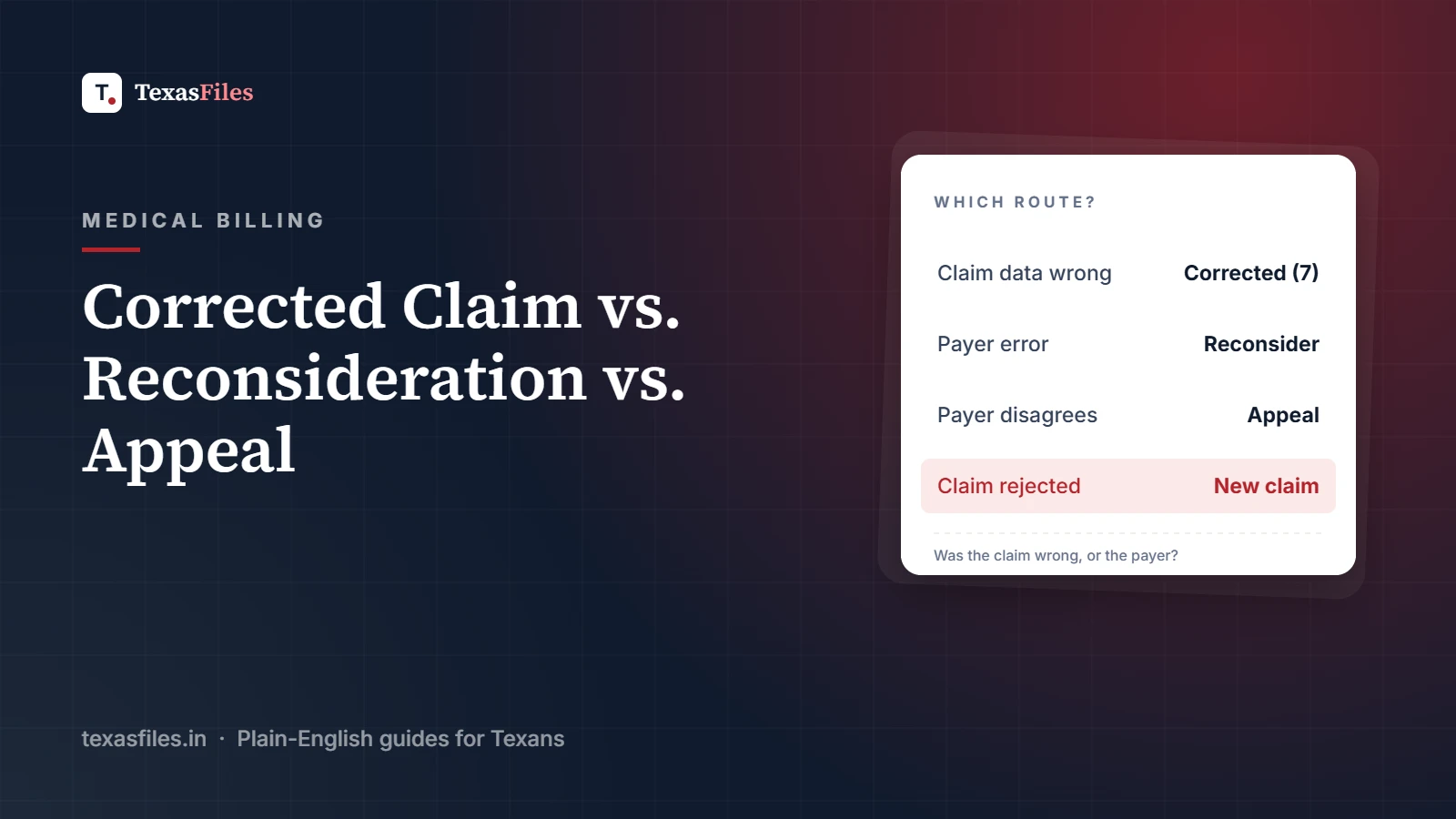
Corrected Claim vs. Reconsideration vs. Appeal: Which One to Use
When to send a corrected claim (frequency code 7 or 8), when to ask for reconsideration, and when to file a formal appeal, including Medicare reopenings and appeal deadlines.
·6 min read
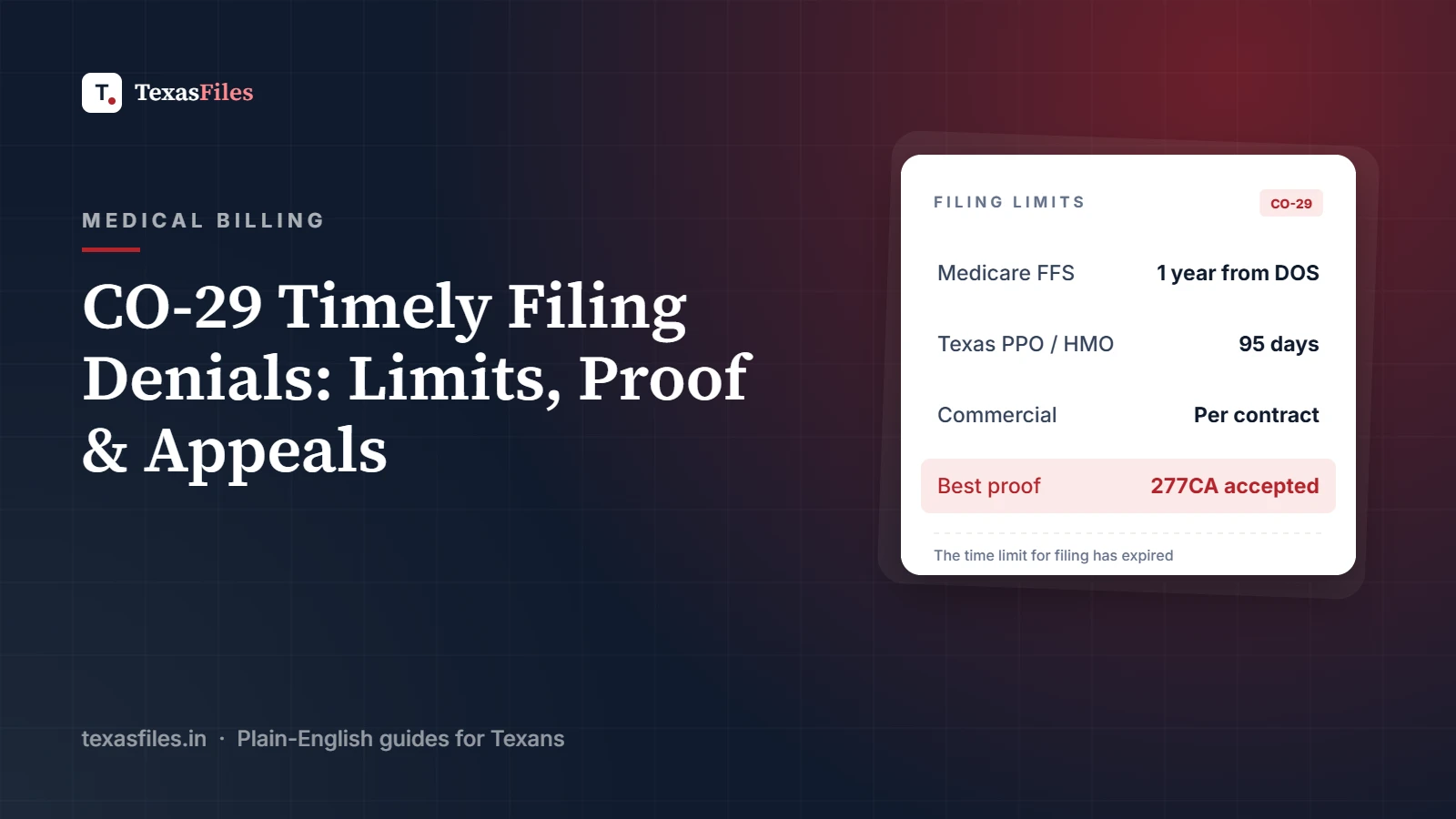
CO-29 Timely Filing Denials: Filing Limits, Proof, and How to Appeal
What a CO-29 timely filing denial means, Medicare's one-year limit, Texas's 95-day rule for insured plans, what counts as proof of timely filing, and how to appeal.
·5 min read