Why You Must Demand an Itemized Medical Bill Immediately
An itemized bill shows every charge and code. Here is how to request one, check it against your EOB, and dispute errors before you pay.
Most medical bills arrive as a single total with a few vague lines like "hospital services" or "pharmacy." That summary does not tell you what you were actually charged for. Before you pay a large balance, you have every right to see the details. An itemized bill lists each charge, date, and code, so you can check that the bill matches the care you received and that your insurance was billed correctly. This guide explains what an itemized bill is, how to request one, and how to review it calmly and accurately.
Summary bill vs. itemized bill
A summary statement shows the total charges, any insurance payments or adjustments, and the amount the provider says you owe. It is useful for a quick look, but it does not let you verify anything.
An itemized bill breaks the total into individual line items. A good itemized statement usually includes:
- Date of service for each charge
- Description of the service, supply, or drug
- Billing codes, such as CPT or HCPCS codes for procedures and supplies, and revenue codes on hospital bills
- Units or quantity, such as the number of doses or hours
- Charge for each line
- Insurance payments, adjustments, and patient balance
In Texas, hospitals are required to give you an itemized statement when you ask for one, and state law also expects most providers to send an itemized bill before trying to collect from you. In practice, most billing offices will provide one without argument.
Why the details matter
Medical billing involves many hands. Charges are entered by different departments, coded, sent to your insurer, and then adjusted. Mistakes can happen at any step. From the billing office side, these are some of the errors worth checking for:
- Duplicate charges. The same test, drug, or supply listed twice on the same date.
- Wrong quantity. A medication or supply billed in more units than you received.
- Services not received. A test that was ordered and then canceled, but still charged.
- Wrong dates. Charges for days before you were admitted or after you left.
- Room or level-of-care errors. For example, being charged for an intensive care room when you were on a regular floor.
- Insurance problems. The claim went to the wrong insurer, used an old policy number, or was denied for a reason that can be fixed.
Not every bill has an error. Many itemized bills turn out to be correct. The point is to confirm what you owe before you pay it, not to avoid paying legitimate charges.
Step-by-step: how to request an itemized bill
- Find the account number. It is on the statement, usually near the top. Have your insurance card ready as well.
- Call the billing office number on the statement. Say, "I would like a complete itemized statement for this account, including dates of service, CPT or HCPCS codes, revenue codes, units, and charges for each line."
- Ask for a hold on the account. Request that the account not be sent to collections while you review it. Ask how long the hold will last.
- Ask for the claim details. Ask whether the claim was sent to your insurance, on what date, and to which insurer. If you want more detail, you can ask for a copy of the claim form. Hospitals usually bill on a form called a UB-04, and doctors on a form called a CMS-1500.
- Get it in writing. Ask to receive the statement by mail, email, or patient portal. Write down the date, the representative's name, and any reference number.
- Follow up if it does not arrive. If you have not received it in a couple of weeks, call again or send a written request.
If you were in the hospital, you may get separate bills from the hospital and from individual doctors, such as the emergency physician, radiologist, or anesthesiologist. Each one bills separately, so you may need to request an itemized statement from each.
How to review the itemized bill
Start with your Explanation of Benefits
If you have insurance, your insurer sends an Explanation of Benefits (EOB) for each claim. The EOB shows what was billed, what the plan allowed, what the plan paid, and your share. Match the dates and totals on the itemized bill to your EOB. Your balance should generally match the "patient responsibility" amount on the EOB. If the provider is asking for more, ask why.
Compare the bill to your own records
Think through what happened during your visit or stay. Check the number of days, the tests you remember, and the medications you were given. If something does not look right, you can request your medical records. Under federal privacy law (HIPAA), you have the right to a copy of your records, though the provider may charge a reasonable fee.
Look up codes you do not recognize
If a description is unclear, ask the billing office what the code means. You can also look up CPT and HCPCS codes online to get a general description. Keep in mind that codes are technical, and a code that looks unfamiliar is not necessarily wrong. Ask before assuming.
How to dispute an error
- List the specific lines. Write down the date, description, code, and amount of each charge you question, and why.
- Call the billing office first. Many errors can be corrected over the phone. Ask the representative to review the lines and send a corrected statement.
- Follow up in writing. Send a short letter or portal message listing the disputed items and asking for a review and a corrected bill. Keep a copy.
- Contact your insurer if the problem is on the insurance side. If a claim was denied or processed incorrectly, ask the insurer what is needed to reprocess it or how to file an appeal.
- Pay the amount you do not dispute. Paying the undisputed portion shows good faith and can help keep the account out of collections.
- Escalate if needed. Ask for a supervisor or the patient financial services manager. Many hospitals also have a patient advocate.
If the bill is for out-of-network care you did not choose, such as emergency care, it may also be protected by surprise billing laws. See our guides on Texas SB 1264 and the emergency room out-of-network problem. For state-regulated plans, you can also contact the Texas Department of Insurance at 1-800-252-3439.
Other ways to lower a correct bill
If the bill is accurate but still more than you can manage, you have options:
- Ask about financial assistance. Nonprofit hospitals are required to have a financial assistance policy. Ask for the application and the income guidelines.
- Ask about a self-pay or prompt-pay discount if you are uninsured or paying a large balance at once.
- Ask for a payment plan. Many providers offer interest-free monthly plans. Get the terms in writing.
- Check your Good Faith Estimate. If you were uninsured or self-pay for scheduled care and the bill is $400 or more above your Good Faith Estimate, you may be able to use the federal patient-provider dispute process.
Frequently asked questions
Does asking for an itemized bill delay my payment due date?
It can, but not automatically. Ask the billing office to place a hold on the account while you review it, and confirm how long the hold lasts.
Is an itemized bill the same as my medical records?
No. The itemized bill shows charges and codes. Your medical records show what your doctors documented. Both can be useful, and you can request each separately.
Should I refuse to pay until I get the itemized bill?
You should not ignore a bill. Instead, request the itemized statement, ask for a hold, and pay any amount you agree you owe. Once you have reviewed the details, pay the corrected balance or set up a plan.
What if I find an error after I already paid?
You can still ask the provider to review the account. If a correction lowers the balance, ask for a refund of the overpayment in writing.
This article is general information, not legal or medical advice.
Written by Ashim
Ashim works in US medical billing and revenue cycle management, handling claim follow-up, denials and appeals every day.
Read our editorial policy. Spotted something outdated? Tell us.
Keep reading
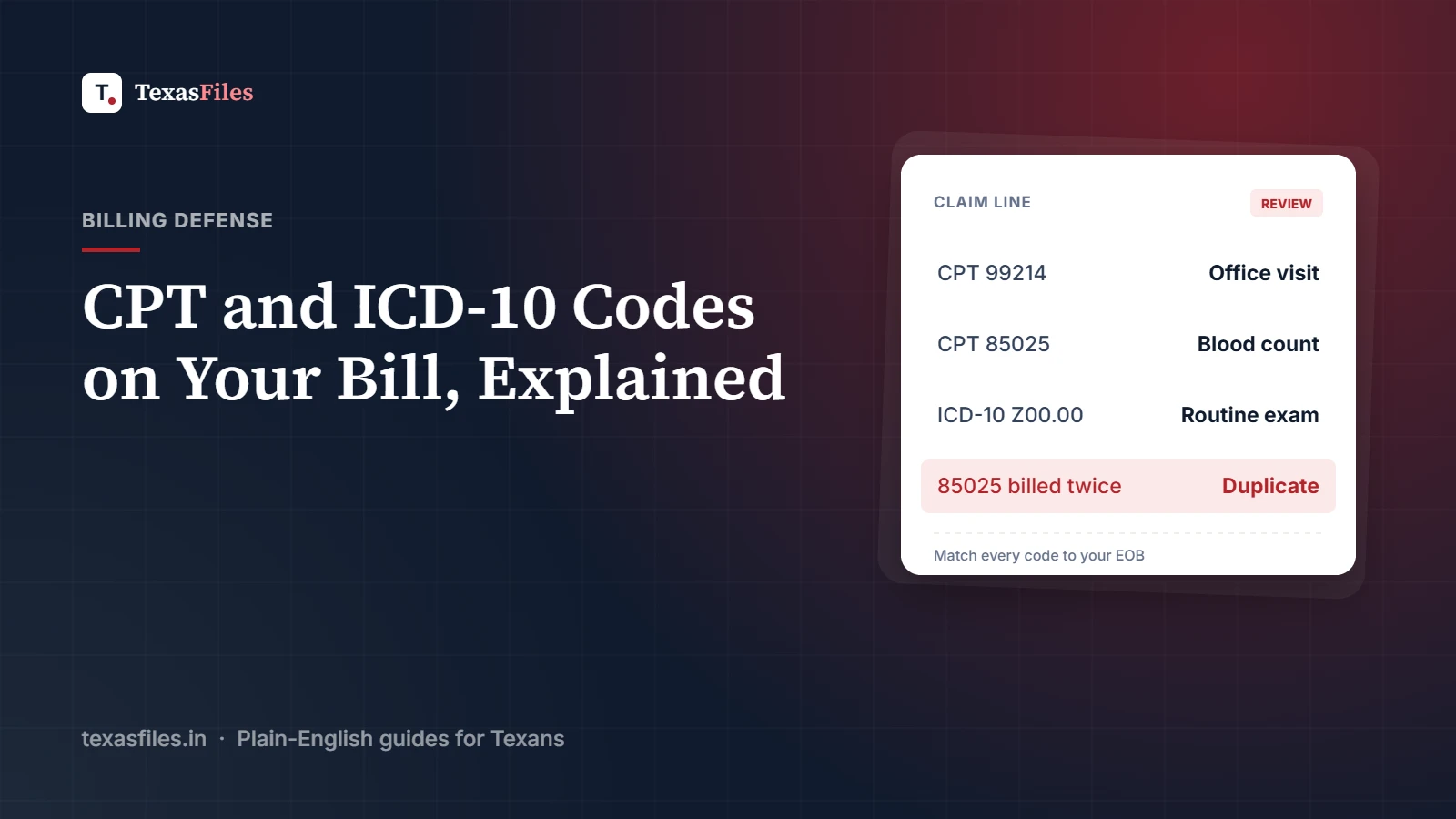
CPT and ICD-10 Codes on Your Medical Bill, Explained
What CPT, HCPCS and ICD-10 codes on your medical bill mean, the most common coding errors, and how to check and dispute them.
·4 min read
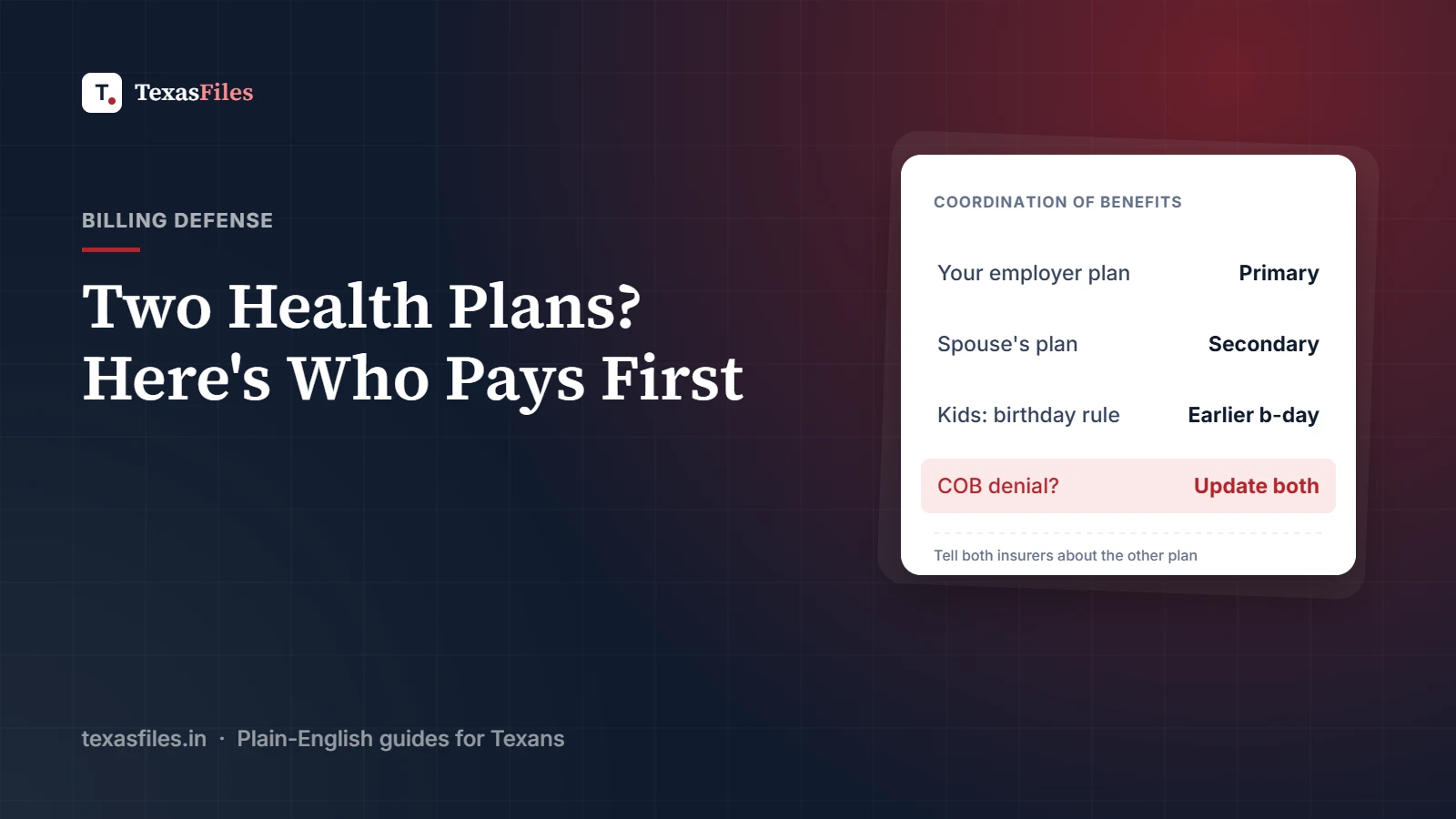
Coordination of Benefits: Who Pays First When You Have Two Health Plans
Have two health insurance plans? Learn the coordination of benefits rules, including the birthday rule and Medicare, and how to fix COB claim denials.
·4 min read
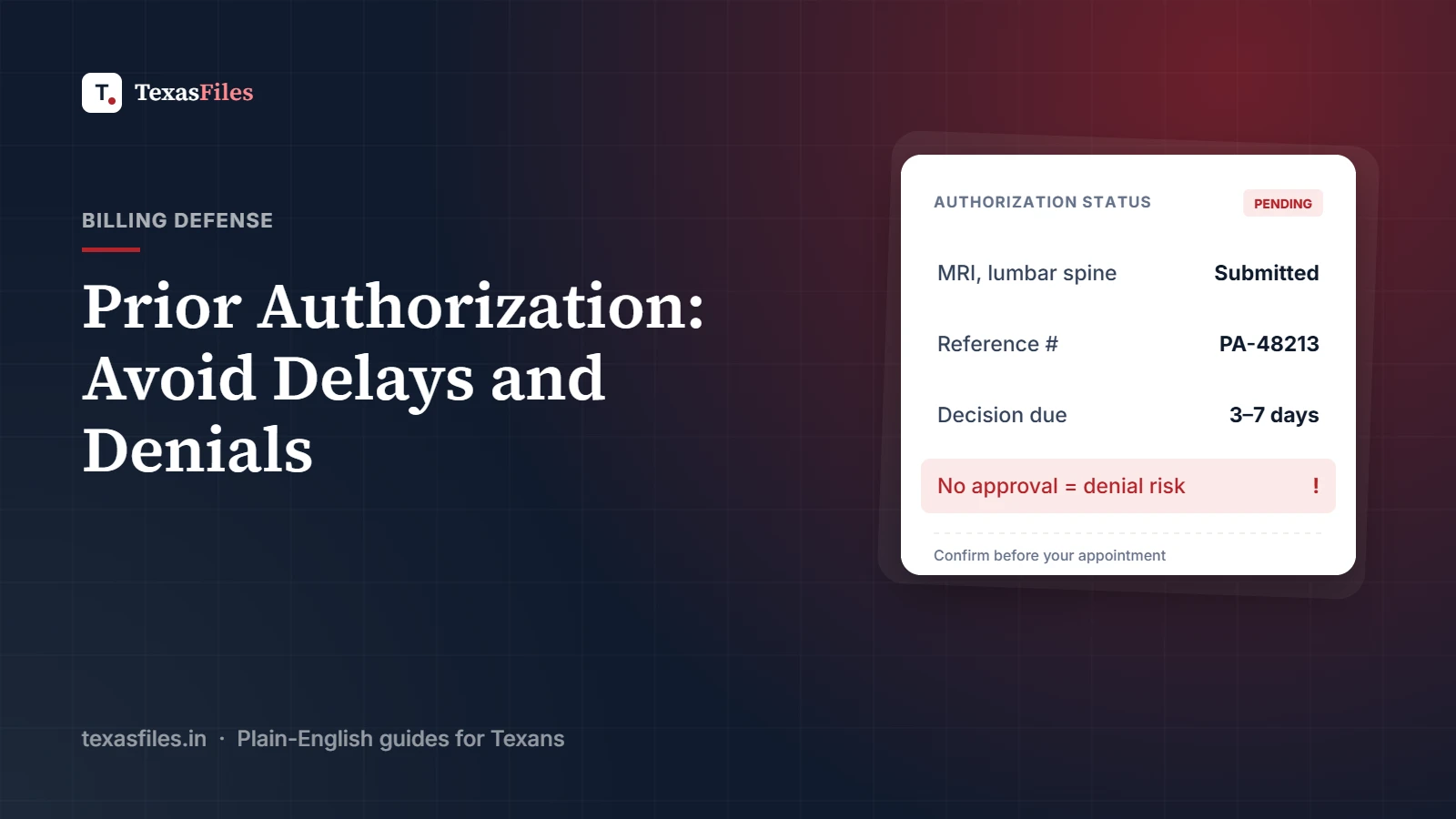
Prior Authorization Explained: How to Avoid Delays and Denied Claims
What prior authorization is, which services need it, how long it takes and what to do if your insurer denies it, including Texas gold card rules.
·4 min read